
Editor's note:
Recently, a phase 1B clinical study led by Academician He Jie of the Cancer Hospital, Chinese Academy of Medical Sciences, was published in the Journal of Thoracic Oncology, providing new evidence for neoadjuvant immunotherapy in non-small cell lung cancer (NSCLC). Professor Xu Song of Tianjin Medical University General Hospital shares his analysis and reflections on this latest progress.
The following article comes from Medlive Oncology; author: Medlive.

Immune checkpoint inhibitors have changed the treatment guidelines for advanced malignant solid tumors, yet the evidence for immune checkpoint inhibitors in the neoadjuvant setting remains insufficient. Recently, a phase 1B clinical study led by Academician He Jie of the Cancer Hospital, Chinese Academy of Medical Sciences, was published in the Journal of Thoracic Oncology, providing new evidence for neoadjuvant immunotherapy in non-small cell lung cancer (NSCLC).
Professor Xu Song of Tianjin Medical University General Hospital shares his analysis and reflections on this latest progress.
► Expert Insights

Professor Xu Song
Associate Chief Physician and Associate Professor, Department of Lung Cancer Surgery, Tianjin Medical University General Hospital;
Master's supervisor
Deputy Director and Party Branch Secretary, Tianjin Lung Cancer Institute
Deputy Director, Tianjin Key Laboratory of Lung Cancer Metastasis and Tumor Microenvironment
MD, Vrije Universiteit Brussel (Free University of Brussels), Belgium
Recipient of the AATS Thoracic Surgery Training Fellowship
Recipient of the ASCO Virtual Mentoring Program • Clinical visiting scholar at Mayo Clinic, MGH, UCM and TGH
Tianjin Distinguished Professor (Young Scholar)
"Young and Middle-Aged Core Innovative Talent" of Tianjin universities
"Young Medical Rising Star" among high-level talents in the Tianjin health sector
"Outstanding Young Science and Technology Talent" of the Tianjin Innovation Talent Promotion Program
Second-level selectee of the Tianjin "131 Innovative Talent Project" • CSCO "35 Most Promising Oncologists Under 35" / CSCO "35 Under 35" Rising Star Award
"Top Ten Physicians" of Tianjin Medical University General Hospital
2020 First Prize of the Tianjin Science and Technology Progress Award
2020 Third Prize of the Chinese Medical Science and Technology Award (Medical Science and Technology)
2015 Third Prize of the Science and Technology Award of the Chinese Anti-Cancer Association
Professor Xu Song:
In recent years, immune checkpoint inhibitors represented by PD-1/PD-L1 have made great progress in the treatment of non-small cell lung cancer (NSCLC) and have gradually been applied in the neoadjuvant setting. Sintilimab is a PD-1 inhibitor independently developed in China that has shown encouraging efficacy across multiple tumor types. In this study initiated by Academician He Jie and Professor Gao Shugeng, neoadjuvant immunotherapy for NSCLC achieved remarkable success.
The study enrolled 40 patients with stage IA–IIIB NSCLC, with a mean follow-up of 37.8 months. The 3-year overall survival (OS) rate reached 88.5%, the 3-year disease-free survival (DFS) rate reached 75%, and the overall recurrence rate was 22.2%. Further subgroup analysis showed that patients with positive PD-L1 expression (≧1%) were more likely to benefit from neoadjuvant immunotherapy, with 3-year OS and DFS rates of 95.5% and 81.8% respectively. Compared with neoadjuvant chemotherapy, neoadjuvant immunotherapy showed longer OS. In addition, this study explored biomarkers for neoadjuvant immunotherapy. Although no statistically significant differences were observed, positive PD-L1 expression (≧1%), high tumor mutational burden (TMB≧10) and better pathological response rates (MPR and pCR) still showed a trend toward greater immunotherapy benefit.
Among the clinical trials of neoadjuvant immunotherapy for NSCLC currently under way, several studies have shown that neoadjuvant immunotherapy is superior to neoadjuvant chemotherapy. At this year's ASCO meeting, the study by Samuel Rosner et al. (NCT02259621) confirmed the efficacy of neoadjuvant nivolumab. Its 3-year, 4-year and 5-year survival rates reached 85%, 80% and 80% respectively, and its 3-year, 4-year and 5-year disease-free survival rates reached 65%, 60% and 60%. The study by Provencio M et al. (NADIM) showed that neoadjuvant immuno-chemotherapy was significantly more effective than neoadjuvant chemotherapy, with 3-year OS and PFS of 81.9% and 69% respectively. In addition, in the CheckMate 816 study, median EFS was significantly longer in the neoadjuvant immuno-chemotherapy arm than in the neoadjuvant chemotherapy arm—31.6 months versus 20.8 months. Neoadjuvant immunotherapy (with or without chemotherapy) is therefore feasible in NSCLC and produces better results than neoadjuvant chemotherapy.
Although neoadjuvant therapy has been proven effective, sufficiently reliable biomarkers to predict efficacy are still lacking. Samuel Rosner et al. found that MPR and positive PD-L1 expression were associated with longer recurrence-free survival. In the NADIM study, achievement of MPR in the primary tumor together with ctDNA clearance was also confirmed to be associated with longer DFS. The CheckMate 816 study likewise confirmed that MPR improves patients' EFS. Therefore, PD-1/PD-L1 expression, TMB, MPR/pCR and blood ctDNA levels may be potential biomarkers for neoadjuvant immunotherapy, but their sensitivity and specificity still require further study.
Current clinical studies mainly use OS or DFS as endpoints, whereas trials of neoadjuvant immunotherapy mainly use MPR/pCR. MPR/pCR has been shown to predict DFS, RFS and EFS, but its correlation with OS remains to be confirmed. Whether MPR/pCR can replace OS as a new reliable endpoint in future clinical trials still needs to be verified by further research.
A number of clinical trials of neoadjuvant immunotherapy for NSCLC are still under way, and OS and DFS data remain incomplete. We therefore look forward to more studies confirming the OS benefit of neoadjuvant immunotherapy, so as to bring more treatment options to patients with lung cancer.
► Analysis of the Original Article
Background
Chemotherapy, radiotherapy and surgical resection are the conventional treatments for NSCLC. For patients beyond stage II, adjuvant chemoradiotherapy is usually given after surgical resection to achieve better outcomes. Although adjuvant therapy improves survival, the 5-year survival rate of NSCLC remains unsatisfactory. Neoadjuvant immunotherapy for NSCLC patients can activate T lymphocytes to attack the tumor and prolong survival as much as possible. In addition, the response to neoadjuvant therapy can guide the choice of subsequent adjuvant therapy. Previous studies have shown that NSCLC patients can benefit more from neoadjuvant therapy than from conventional treatment; however, many patients receiving neoadjuvant chemotherapy experience adverse events such as fatigue, pneumonitis and hypothyroidism, which limits its use. Immunotherapy, as an emerging treatment with better clinical efficacy and fewer complications, is therefore regarded as a principal preoperative approach for many cancers, including NSCLC.
In this study, the investigators followed NSCLC patients for 3 years, revealing the safety and efficacy of neoadjuvant sintilimab. They also evaluated efficacy in patient subgroups (or potential predictive factors: PD-L1 expression, tumor mutational burden and major pathological response).
Methods
Sintilimab (200 mg, intravenous) was administered to patients with stage IA–IIIB NSCLC (registration number: ChiCTR-OIC-17013726). Surgery was performed 29–43 days after treatment. All patients underwent PET/CT at enrollment and before surgery to assess tumor metabolism after PD-1 inhibitor therapy. At the same time, the investigators conducted an exploratory analysis of PD-L1 expression in 32 eligible patients (Figure 1). Safety was the primary endpoint. Key secondary endpoints included overall survival (OS), disease-free survival (DFS), event-free survival and major pathological response.
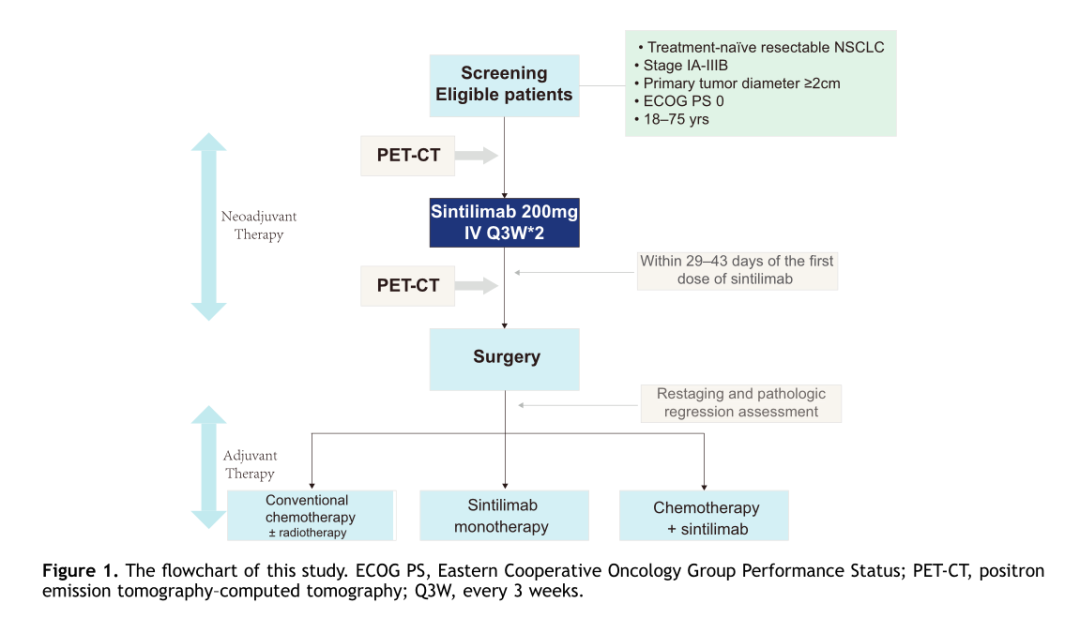
Figure 1 Study flow chart
Clinical characteristics of the patients
Between March 6, 2018 and March 8, 2019, a total of 43 NSCLC patients were screened and 40 were ultimately enrolled. Among the 40 enrolled patients, 32 (80%) had a history of smoking and 33 (82.5%) had squamous cell carcinoma; 8 (20%) had stage IA and IB disease, 14 (30%) had stage IIA and IIB disease, 10 (25%) had stage IIIA disease, and 8 (20%) had stage IIIB disease (8th edition TNM staging). PD-L1 expression was assessed in 32 patients (80%), of whom 22 (55%) were PD-L1 positive; 37 patients (92.5%) underwent surgery after neoadjuvant therapy (two cycles of sintilimab). Among them, 36 underwent R0 resection (Figure 2) and 1 underwent R2 resection (mediastinal lymph node invasion).
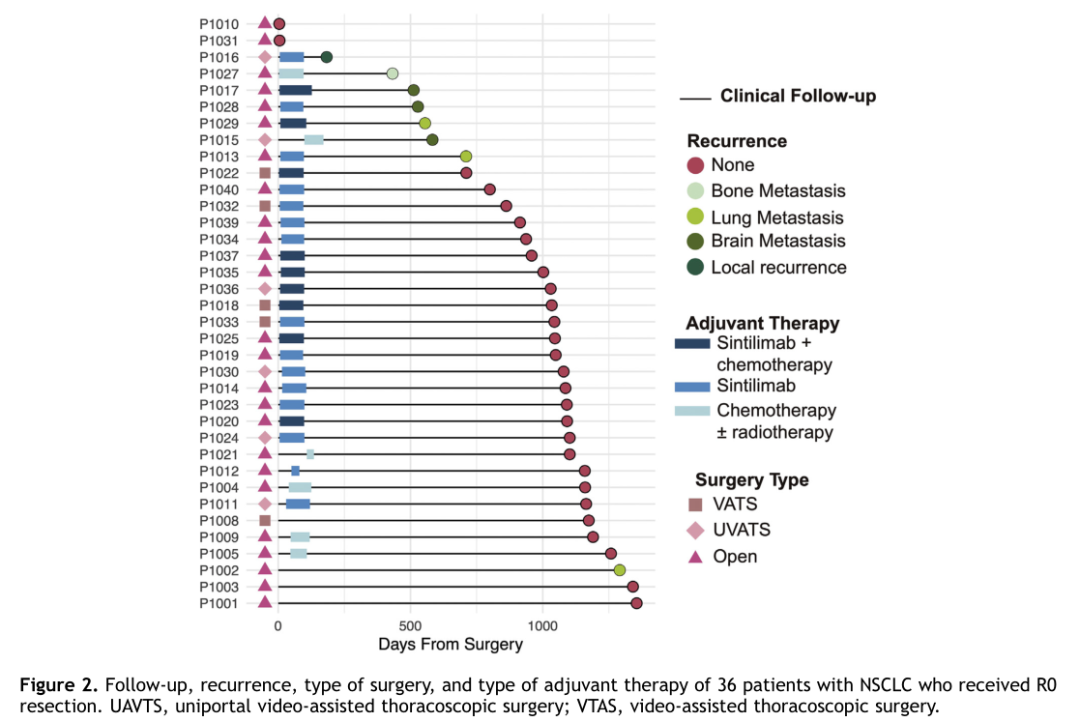
Figure 2 Clinical information of the patients
Recurrence
A total of 8 patients (22.2%) experienced recurrence: 1 local recurrence, 3 lung metastases, 3 brain metastases and 1 bone metastasis. Among these 8 patients, 1 (12.5%) relapsed within 1 year after surgery and 6 (75.0%) relapsed within 2 years after surgery.
Survival
The mean follow-up was 37.8 months (1.73–46.5 months). The investigators analyzed survival in two patient cohorts: those with R0 resection (36 patients) and those with positive PD-L1 expression (TPS≥1%, 22 patients). Among the 36 patients with R0 resection, the 3-year OS rate was 88.5% and the 3-year DFS rate was 75.0% (Figure 3A). In the PD-L1-positive cohort, the 3-year OS rate was 95.5% and the 3-year DFS rate was 81.8% (Figure 3B).
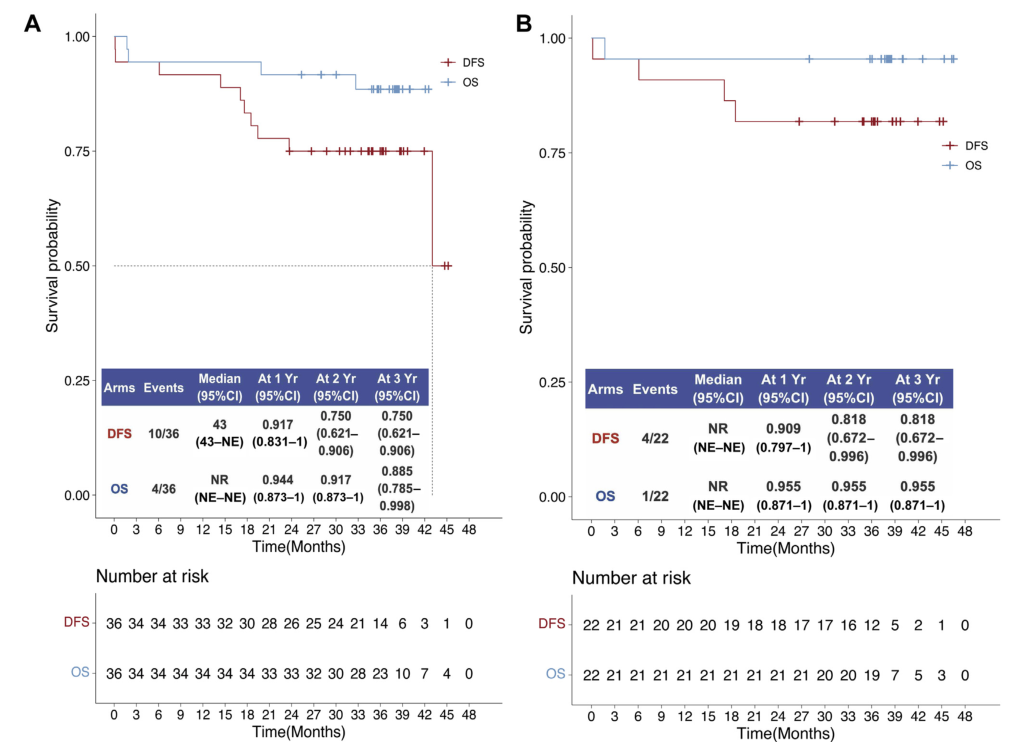
Figure 3 Survival analysis
Based on PD-L1 expression level, patients were divided into high, medium and low PD-L1 subgroups (1%, 10% and 50%). DFS analysis showed that, compared with patients with PD-L1 <1%, patients with PD-L1 ≥1% had longer DFS (HR=0.275, P=0.0325) (Figure 4A). However, there were no significant differences between the subgroups defined by the 10% and 50% cut-offs (Figures 4B–C).
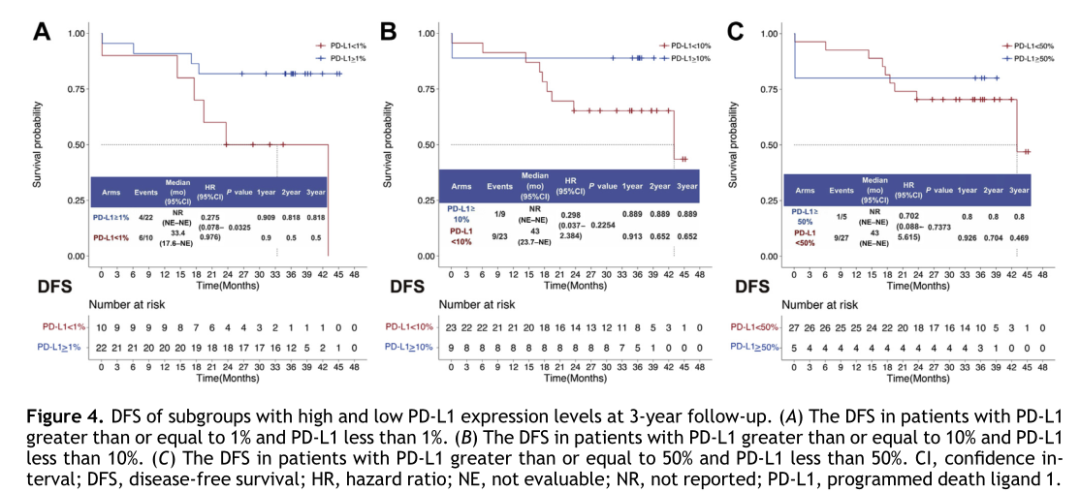
Figure 4 Subgroup analysis
Safety
Adverse events (AEs) and neoadjuvant treatment-related AEs (TRAEs) were observed in 32 and 21 patients respectively. Two patients died shortly after surgery due to severe AEs: one patient died of disturbance of consciousness on postoperative day 8, and one patient died of immune-related pneumonitis after surgery.
Conclusions
Based on 3 years of follow-up, this study provides the first long-term, comprehensive survival data for a PD-1 inhibitor used as neoadjuvant therapy in NSCLC patients, demonstrating the efficacy and feasibility of neoadjuvant sintilimab, particularly for patients with positive PD-L1 expression.
References
1. Zhang F, Guo W, Zhou B, et al. Three-Year Follow-Up of Neoadjuvant Programmed Cell Death Protein-1 Inhibitor (Sintilimab) in NSCLC. J Thorac Oncol. 2022;S1556-0864(22)00216-7. doi:10.1016/j.jtho.2022.04.012
2. Samuel Rosner. et al. Neoadjuvant nivolumab in early-stage non–small cell lung cancer (NSCLC): Five-year outcomes. https://meetings.asco.org/abstracts-presentations/208907
3. Mariano Provencio-Pulla. et al. Nivolumab + chemotherapy versus chemotherapy as neoadjuvant treatment for resectable stage IIIA NSCLC: Primary endpoint results of pathological complete response (pCR) from phase II NADIM II trial. https://meetings.asco.org/abstracts-presentations/208906
4. Mariano Provencio-Pulla. et al. Neoadjuvant nivolumab (NIVO) + platinum-doublet chemotherapy (chemo) versus chemo for resectable (IB-IIIA) non-small cell lung cancer (NSCLC): Association of pathological regression with event-free survival (EFS) in CheckMate 816. https://meetings.asco.org/abstracts-presentations/208905
