
Source: XunYin JiYao
A Perfect Match

On October 17, 2023,Thermo Fisher announced that it would acquire Olink, a leader in proteomics, for US$26 per share in an all-cash transaction. The deal valued Olink at US$3.1 billion, a 74% premium over its closing price on October 16, 2023.
This is the respect that one strong player shows to another.
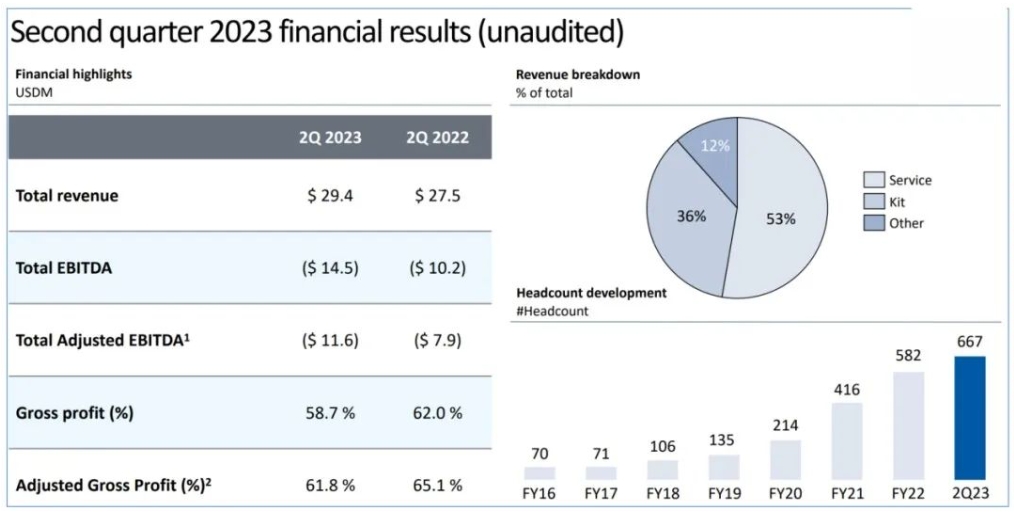
In Q2 2023, Olink recorded revenue of US$29.436 million, with full-year revenue expected to reach US$192–200 million.
By a simple calculation, that puts the price-to-sales ratio at roughly 15–16 times.
Compared with the rather tight-fisted merger of SomaLogic and Standard BioTools, this is what truly represents the respect proteomics deserves.
A union of two strong players—a perfect match indeed.
Mutual Needs
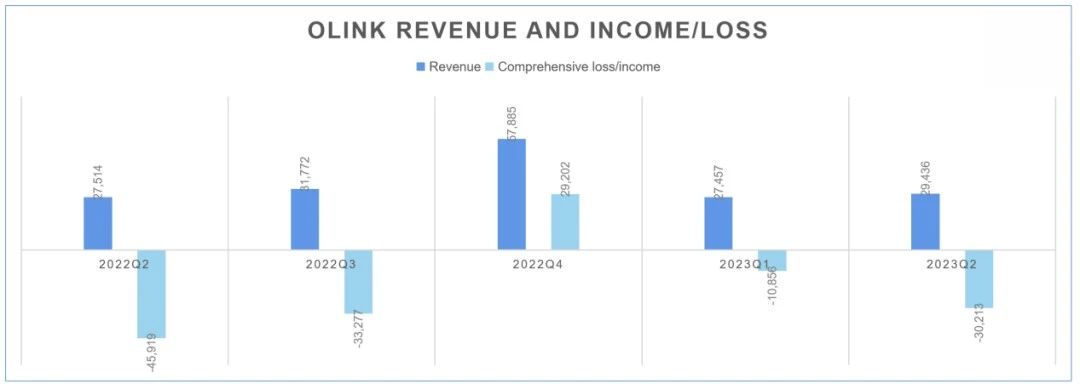
If we look only at Olink's revenue, there is nothing seriously wrong.
Yet, as an innovative company, it is squarely constrained by the heavy investments made in its early years.
Except for Q4 2022, when it posted positive income, every other quarter has shown a loss.

Previously released financial results show that in Q2 2023, TMO (Thermo Fisher) reported total revenue of US$10.687 billion, down 2.58% from US$10.97 billion in Q2 2022.
Spending a little money to upgrade the growth engine is well worth it.
More importantly, Thermo's deep presence in the life sciences is almost without blind spots.
After this acquisition, Olink's products will appear on the desk of nearly every potential customer almost overnight.
But the implications do not stop there.
The Ripple Effects
With this, both of the two leading proteomics innovators, Olink and SomaLogic, have lost their independence.
The difference is that one married into a wealthy family, while the other was swept away by a penniless young man—just kidding.
So what impact will this bring?
First, Illumina will seize the opportunity even more firmly to develop the NGS version of SomaLogic's reagents.
Whether Thermo's acquisition of Olink will lead it to make a move on the Life sequencing platform is anyone's guess.
And if it does, the already loose ties between Illumina and Olink will loosen further.
The sequencing growth that Olink can deliver will continue to decline.
Second, proteomics research will begin to spread.
Backed by Thermo's influence and market penetration, Olink's technology will in all likelihood spread widely, raising the profile of proteomics research.
Third, opportunities arise for new proteomics innovators.
Losing independence means that R&D and market feedback are absorbed into the parent company's system.
New challengers, with their agile insight into market opportunities, may well emerge as the next leaders.
In addition, emerging sequencer manufacturers at home and abroad—MGI, Element, GeneMind and Sailu—would prefer to support a new company with far fewer entanglements.
