
In the previous instalment (From LuCa™ to Infinite Possibilities: How to Build Your Own Disease Model with Elixir™), we described how the Elixir™ large model helps researchers build their own disease models quickly.
Today we turn the spotlight on the first outcome of the Elixir™ family to be validated in a real-world study — LuCa™ (Lung Cancer, LuCa), the lung cancer early screening model — and look at how it captures the signals that are "most silent" in the early stages of lung cancer.
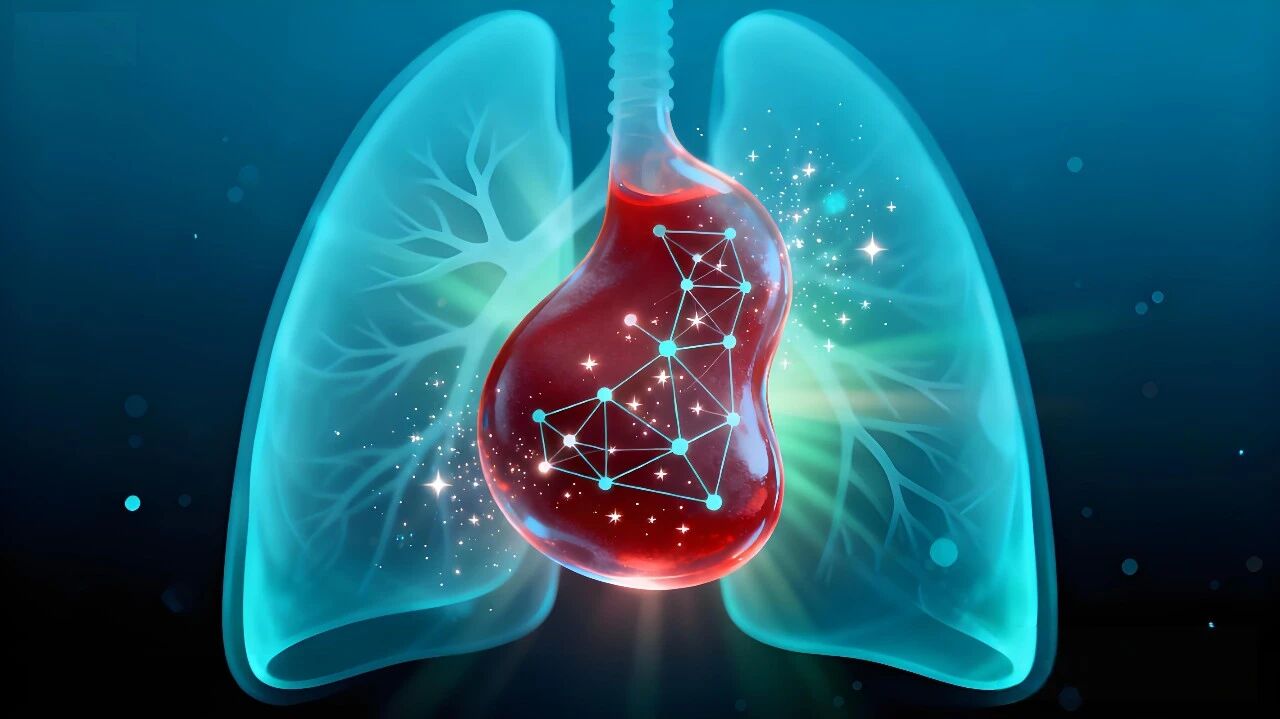
Part.1 From a "hidden killer" to a target for early screening 
Lung cancer is one of the malignant tumours with the highest incidence and mortality rates worldwide. Early symptoms are mild, and more than 70% of patients are already at a middle or late stage by the time they are diagnosed.
Conventional low-dose CT (LDCT) is an effective screening tool, but it runs into real bottlenecks — high cost, radiation concerns, poor adherence and low coverage — which leave "early screening" stranded at the level of an ideal.
So the Elixir™ team posed a bold question:Could the early risk signals of lung cancer be identified from a single tube of blood alone?
 LuCa™ is the answer to that question.
Part.2 The birth of LuCa™: when AI meets NMR
Incubated from the Elixir™ foundation, LuCa™ combinesnuclear magnetic resonance (NMR) technology with a Transformer deep learning model. By decoding metabolite signals in blood, it identifies the "disease fingerprint" hidden at the molecular level.
During training, LuCa™ drew on plasma sample data from 160,000 cases in the Elixir™ large model foundation, analysing multi-dimensional metabolic features in depth.
Through repeated rounds of AI fine-tuning, it gradually learned to recognise the "faint signals" that stand for early lung cancer risk.
▍ This means AI no longer depends on imaging to "see" a tumour; it can detect subtle chemical abnormalities in the body before a lesion has formed into a solid mass.
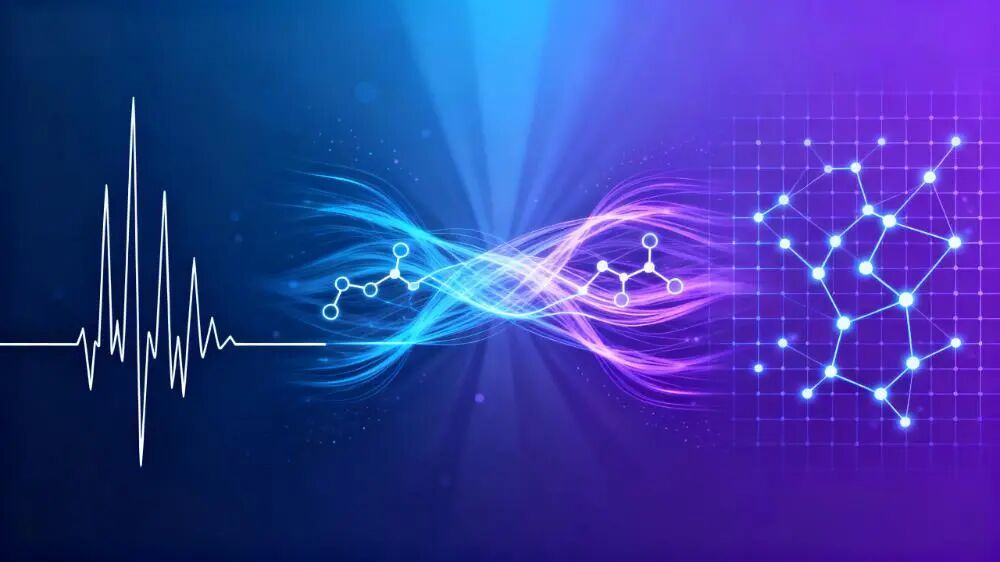
Part.3 Performance validation: a breakthrough with AUC > 0.95
In multicentre real-world studies, LuCa™ showed excellent screening performance:
● Overall discriminative ability (AUC) ≥ 96.7%
● Negative predictive value ≥ 98.7%
● Positive predictive value ≥ 86.7%
▍ This means it can capture potential signals at a very early stage, outperforming comparable blood-based models by a clear margin.
More importantly, the LuCa™ testing process is minimally invasive, fast and scalable:
● Requires less than 0.5 mL of plasma
● No fasting required; the process is simple
● Reports issued within 5-7 working days
LuCa™ brings research findings to the public for the first time in the form of a genuinely deployable testing service.
It is suited to screening in high-risk groups (smokers, people with a family history and so on), and can also be applied in routine health checks, postoperative recurrence monitoring and assisting in judging whether a nodule is benign or malignant.
Part.4 The technology foundation: stable, compliant and trustworthy
▶ Core LuCa™ testing is supported by Bruker's original NMR platform
▶ All testing is performed in medical laboratories holding a medical institution practice licence and ISO 9001/13485 certification
▶ Data follows ethical and privacy standards throughout the entire process
▶ Ensuring compliant and reliable translation from research into clinical practice
Part.5 The significance of LuCa™: bringing early screening "within everyone's reach"
The arrival of LuCa™ moves lung cancer early screening from "imaging medicine" towards "molecular intelligence". Its goal is not only greater precision but wider reach —giving more people access to screening at lower cost and higher efficiency.
▍ Lung cancer screening is not only about "seeing";
▍ It is about — finding earlier, intervening earlier, protecting earlier.

The launch of LuCa™ confirms the transferability and research potential of the Elixir™ large model. Every "LuCa™" may become a "molecular-level sentinel" in the health management systems of the future.
And this is precisely the mission of Elixir™ —
to make AI a co-creative engine for the life sciences,
and to let both research and health move "one step earlier".
In the next instalment, we will extend the story from the success of LuCa™ to a bigger question: as AI steadily becomes the core driving force of the life sciences, who is mastering the underlying computing power of the next generation of life science?
