
The annual Cancer Prevention and Treatment Week has just drawn to a close. To raise public awareness of cancer prevention and control, the China Anti-Cancer Association has designated April 15 to 21 as the National Cancer Prevention and Treatment Publicity Week every year since 1995. In 2022, organizations including the National Cancer Center, the Chinese Center for Disease Control and Prevention, the China Anti-Cancer Association and the China Cancer Foundation called on all sectors of society to take part in a series of activities under the theme "Cancer Prevention and Treatment: Act Early." The campaign encourages a correct understanding of cancer and active cancer prevention and control, and calls for early prevention, early detection, early diagnosis and early treatment, so as to reduce cancer incidence and mortality and improve the early diagnosis rate and survival rate. Among the many approaches to cancer prevention and control, liquid biopsy technology has once again drawn considerable attention.

Cancer Prevention and Control Policies
Early screening, early diagnosis and early treatment have long been widely recognized around the world as effective means of reducing cancer incidence and mortality. Data show that for cancers detected at an early stage, the five-year survival rate can reach as high as 90%. However, the cancer early screening methods currently available on the market all have certain limitations and cannot deliver accuracy, simplicity and low cost all at once. According to China's authoritative cancer report released in 2022, roughly 10,000 people are diagnosed with cancer every day; a high proportion of cases are already at a middle or late stage at first diagnosis, with poor prognosis and low survival rates.
The "Healthy China 2030" Plan outlines that by 2030, average life expectancy in China should reach 79 years and the overall five-year cancer survival rate should rise by 15%. It also calls for adhering to the principle of putting prevention first and combining prevention with treatment, and for strengthening screening for chronic diseases and early detection of malignant diseases. At present, many regions in China have yet to meet these targets, and malignant tumors remain one of the main factors constraining the health and life expectancy of the population. The government therefore encourages local authorities to incorporate cancer screening into public welfare programs, in order to expand the coverage of cancer screening, to work from both the supply side (by optimizing service provision) and the demand side (by guiding service demand), and to push cancer screening and early diagnosis and treatment to a deeper level.
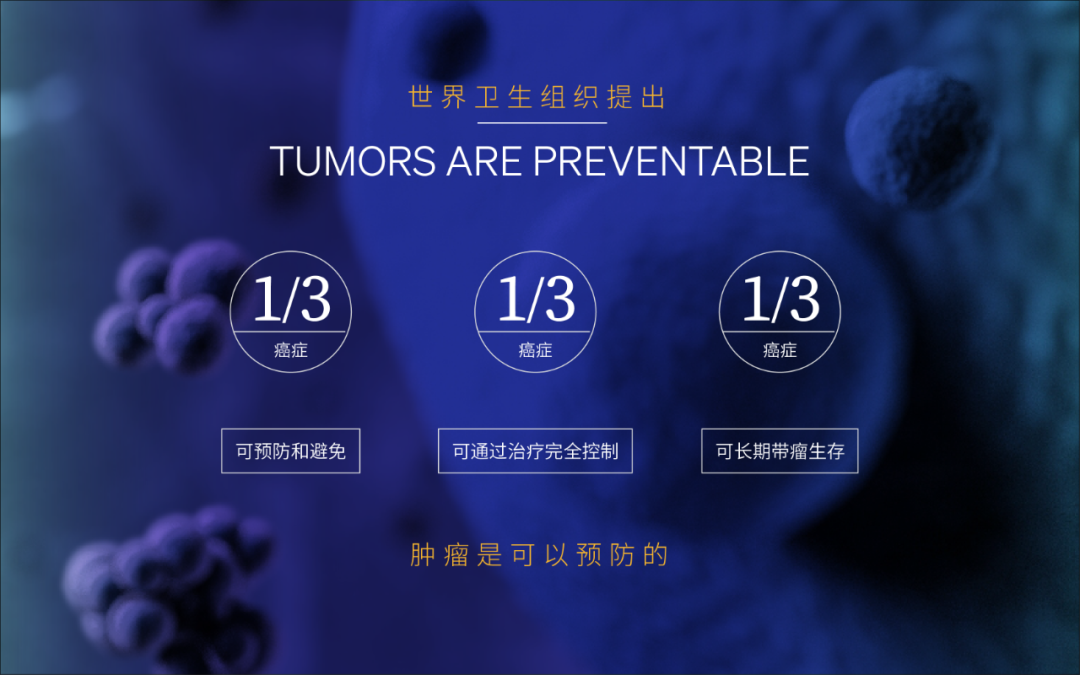
The Long Growth of Malignant Tumors
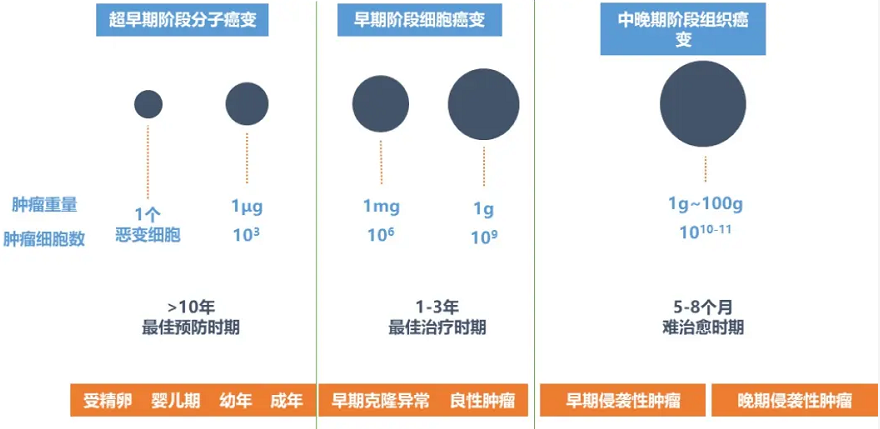
Typically, a malignant tumor takes more than 10 years to progress from molecular carcinogenesis at the ultra-early stage to tissue carcinogenesis at the middle-to-late stage. During this period, the malignancy grows from a single cell into nearly 100 grams of cancerous tissue, and as the tumor expands at an accelerating pace and the time span continues to compress, it passes through three fission stages. If intervention can be made during the optimal prevention window of up to 10 years and the optimal treatment window of up to 3 years, the efficiency of diagnosis and treatment across the entire cancer care pathway will undoubtedly be greatly improved.
In 2018, in order to improve the standardization of cancer diagnosis and treatment, the National Health Commission revised the existing diagnosis and treatment guidelines for various cancer types and issued the "Notice on Issuing the Diagnosis and Treatment Guidelines for 18 Cancers Including Primary Lung Cancer (2018 Edition)" (hereinafter referred to as the "Guidelines"), which set out standardized measures for the risk factor screening, diagnosis, typing, treatment and prognosis of cancers with high incidence in China, such as primary lung cancer, thyroid cancer, esophageal cancer and gastric cancer.
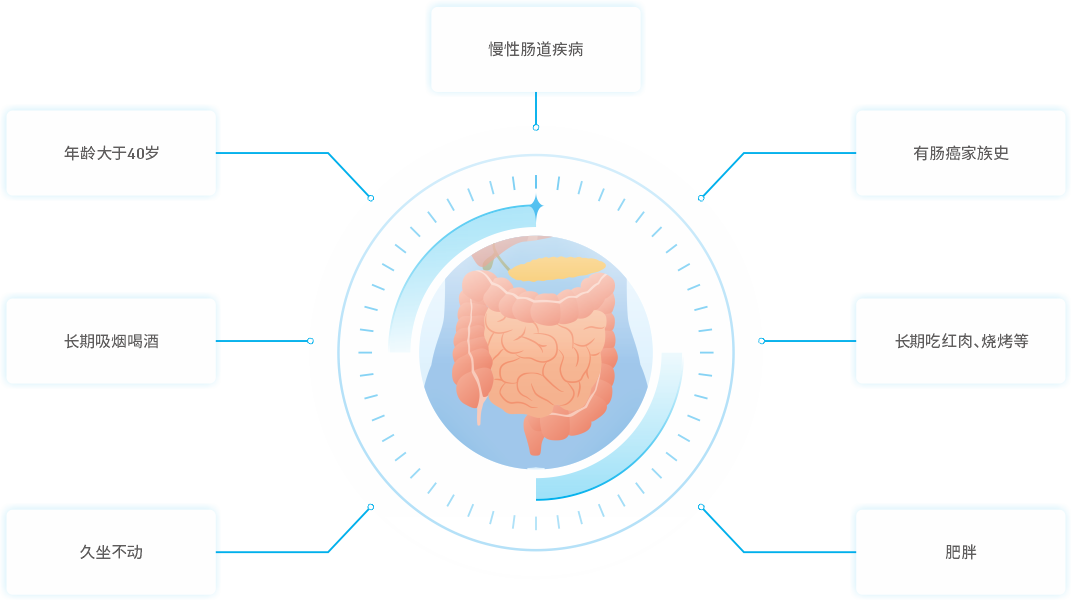
For example, this series of guidelines requires that breast ultrasound or mammography and other imaging examinations be performed regularly in women aged 40 to 70 at high risk of breast cancer, and that people over 40 at high risk of gastric cancer regularly undergo a combination of imaging, endoscopic and tumor marker tests such as G-17, gastroscopy and PG testing, so as to achieve early diagnosis and early treatment of these diseases.
In addition, the "Three-Year Action Plan for Cancer Prevention and Treatment in China" proposes expanding the coverage of cancer screening and early diagnosis and treatment. Nationwide, many leading tertiary hospitals — including Peking Union Medical College Hospital, Peking University Cancer Hospital, the Army General Hospital, the Second Affiliated Hospital of Zhejiang University School of Medicine and the First Affiliated Hospital of Sun Yat-sen University — are already running or preparing to launch large-scale early digestive tract cancer screening programs for high-risk populations. Ideally, early cancer screening would be applied in medical institutions and third-party medical laboratories providing in-hospital testing services, in health check-ups that reach high-risk populations directly, and in convenient at-home tests for general consumers. At this stage, however, early cancer screening products are still at an early stage of commercialization and remain focused mainly on in-hospital patients and high-risk populations outside the hospital.
Screening Methods for Early Cancer Detection
The methods used for early cancer screening generally fall into two categories: conventional testing and liquid biopsy. Conventional testing mainly includes tumor marker tests, medical imaging examinations and endoscopy. Liquid biopsy, a concept that stands in contrast to tissue biopsy, has evolved alongside the emergence of a large number of new technologies in precision medicine and offers a more cost-effective solution for early cancer screening. Liquid biopsy samples non-solid biological tissue and analyzes tumor-related analytes such as circulating tumor cells and circulating tumor DNA. In recent years, how to translate relevant research findings effectively and close the gaps in disease prevention, screening and treatment has been a key question for the entire precision medicine industry.
The Most Promising Screening Tool — Liquid Biopsy
First, liquid biopsy works on liquid samples such as blood, urine or stool. Sampling is simple, which significantly lowers costs and reduces the trauma and risk to patients.
Second, unlike medical imaging and endoscopy, which can only examine tumor lesions at a specific site each time, liquid biopsy makes it easier to cover multiple types of tumors simultaneously.
Third, liquid biopsy is simple to perform and fast to run, and samples can be obtained repeatedly for high-frequency monitoring.
In addition, malignant tumors are heterogeneous diseases, and liquid biopsy can reflect the full genomic landscape of a tumor, reducing the diagnostic bias caused by tumor heterogeneity while capturing the dynamic changes of tumor development in a timely manner. In the early stages of cancer (stage I and stage II), tumor molecular markers can be used to detect features appearing at the multi-omics level — including the genome and the proteome — of tumor cells, thereby providing guidance for early diagnosis, prognosis and the choice of treatment.
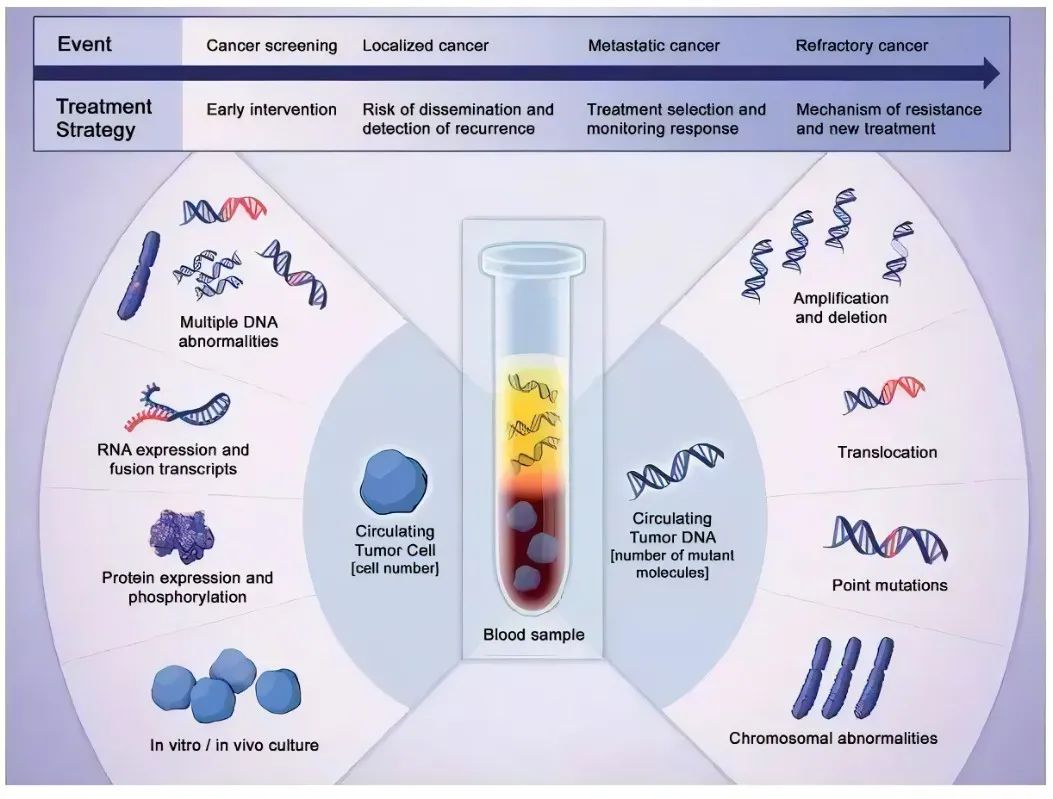
Generally, the clinical translation of any gene sequencing technology goes through four stages, and the same holds true for liquid biopsy-based early cancer screening.
The first stage is building the underlying technology platform — the most basic yet most essential requirement for a gene sequencing company.
The second stage is building the model and conducting retrospective studies, that is, testing the model's algorithm against known data. This step lays the initial foundation for clinical application.
The third stage is conducting prospective clinical trials, that is, testing the model from the previous stage in the real world. At this stage, the more patients enrolled, the more faithfully the clinical performance is reflected.
The fourth stage is the industrial commercialization of the product.
Although many unanswered questions remain if one tries to understand early cancer screening from the perspective of supply and demand, looking at it through a technological lens simplifies the problem considerably. By accurately describing a product's biomarkers, technology platform and medical statistics, one can basically characterize its functionality and cost-effectiveness in full.
What Are the Advantages of Different Types of Liquid Biopsy?
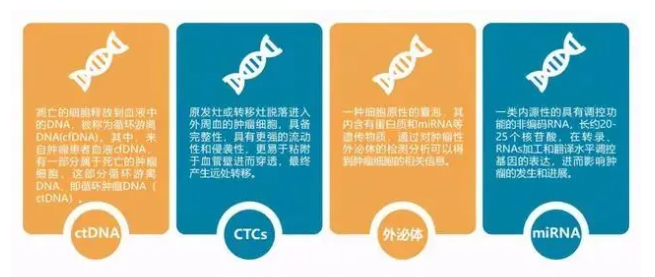
Generally, four types of biomarker carriers are used for liquid biopsy in early cancer screening: circulating tumor cells (CTCs), circulating tumor DNA (ctDNA), exosomes and microRNA (miRNA).
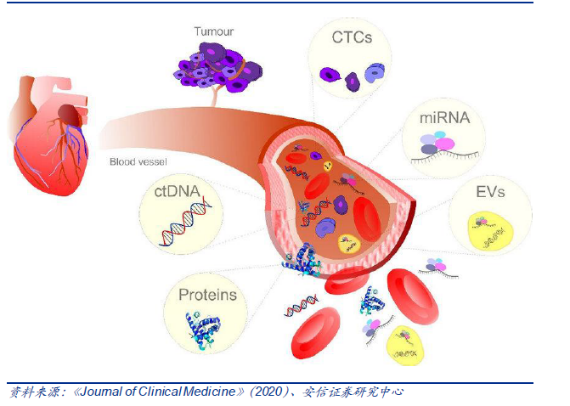
When used for early cancer screening, each of the four carriers has its own strengths and weaknesses. CTCs have a short half-life and a strong ability to reflect the current state of the disease in real time, but their abundance is low and only a very small number can be captured. cfDNA/ctDNA is highly representative of different tumor tissues and helps define tumor genotyping, but standardized testing workflows are lacking, and its abundance in the blood of early-stage patients is often below the detection limit of available assays. Exosomes are abundant and stable, but the technologies for their isolation and analysis remain limited in sensitivity. miRNA has shown good predictive value in populations at high risk of lung cancer, but correlation studies still need to be strengthened.
The emergence of liquid biopsy technology can resolve the difficulties of clinical sampling and meet the clinical needs for early diagnosis, early testing and high-frequency monitoring of patients. This technology represents the major trend in the development of early cancer screening technology, and it also holds promise for applications such as dynamic monitoring of cancer patients and personalized medication guidance. At present, multi-omics and bioinformatics analysis, together with large-scale multi-omics cohort studies, represent the mainstream trend in the development of early cancer screening products, as well as a new direction for discovering the chemical basis of life and gaining a deeper understanding of its molecular mechanisms. The application of proteomics-based liquid biopsy to early cancer screening is particularly favored by researchers and experts. The integrated analysis of multi-omics data helps researchers systematically study clinical pathogenesis, confirm disease targets, discover biomarkers and make early disease diagnoses, and it drives multi-omics data to play an even more important role in individualized treatment and medication guidance.
References:
https://mp.weixin.qq.com/s/KY3FUTb2QaXaLO8MKJQ-_g
