中文EN

News

新闻资讯
Home > News > Industry News
[Industry Research Express] BCC Research Publishes Its 2022 Global Proteomics Technology and Market Report
Published: 2022-12-14

The research report "Proteomics: Technologies and the Global Market," published by BCC Research, has recently been released. The report examines and analyzes the global proteomics industry along a number of dynamic dimensions: proteomics platforms, the market forces driving growth, product types, major market applications, companies and alliances, industry dynamics, patents, future market potential, and product sales forecasts for the period from 2019 to 2027. Taking 2021 as the base year, the newly released report forecasts market value out to 2027. It also updates the market hierarchy, the latest trends, drivers and challenges, competitive analysis, market opportunities and the 2021 market rankings of individual companies, while adding new coverage of COVID's impact on the proteomics market.


A selection of highlights is summarized below ————


Proteomics market size and forecast


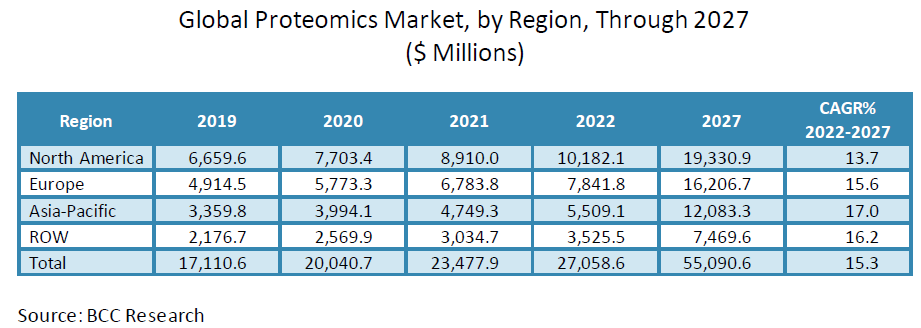
The global proteomics market was worth close to US$20 billion in 2020 and grew to US$23.5 billion in 2021. It is expected to expand at a compound annual growth rate (CAGR) of 15.3% to reach a value of US$55.1 billion by 2027.


By end user


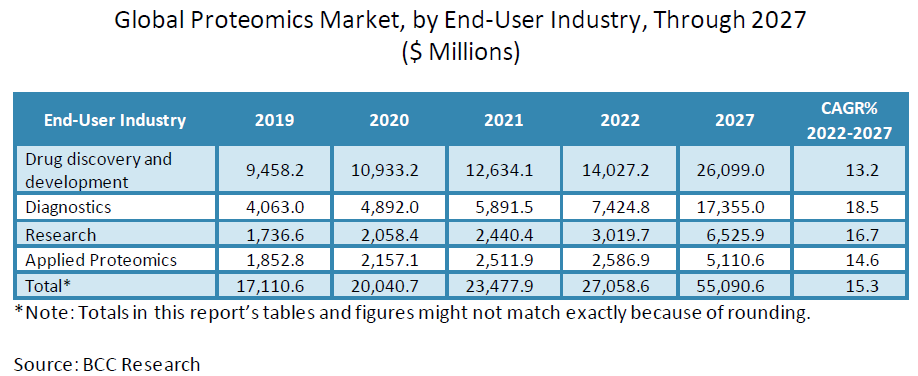
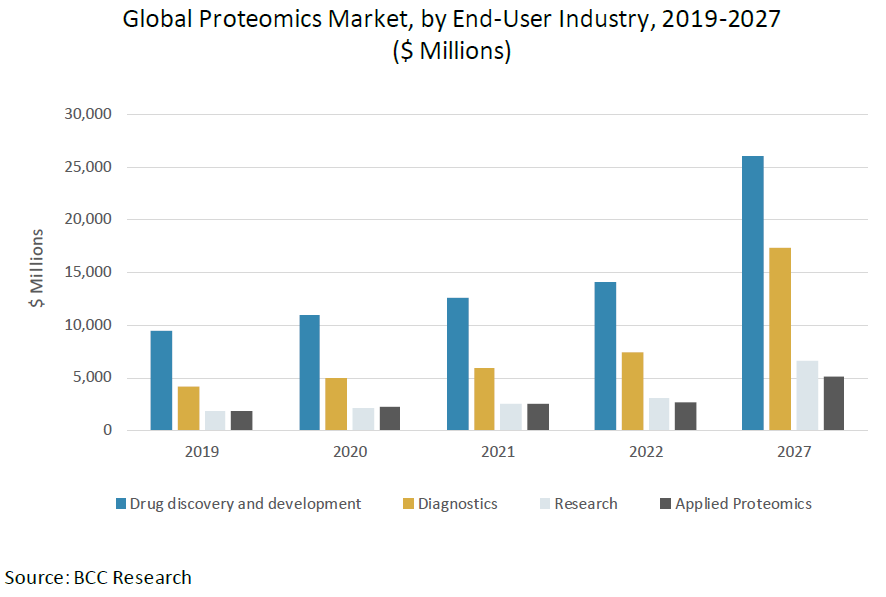
The proteomics market by end user is divided into four main segments: drug discovery and development, diagnostics, research and applied proteomics. Drug discovery and development generated US$12.6 billion in 2021, or 53.8% of the market. This segment is expected to grow at a CAGR of 13.2% over the forecast period. Diagnostics is expected to be the fastest-growing segment over the forecast period, with a CAGR of 18.5%.


640.png

640-1.png


By technology platform


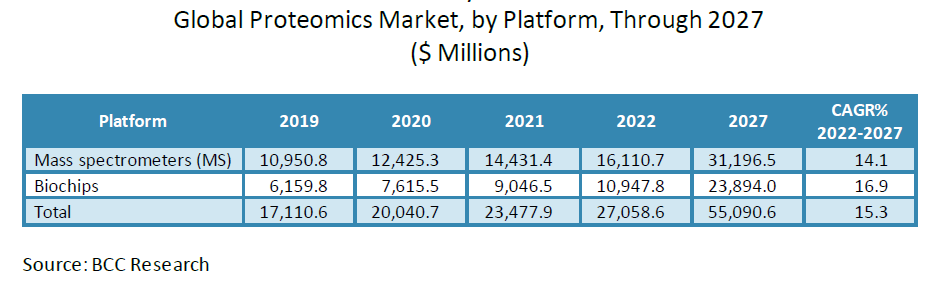
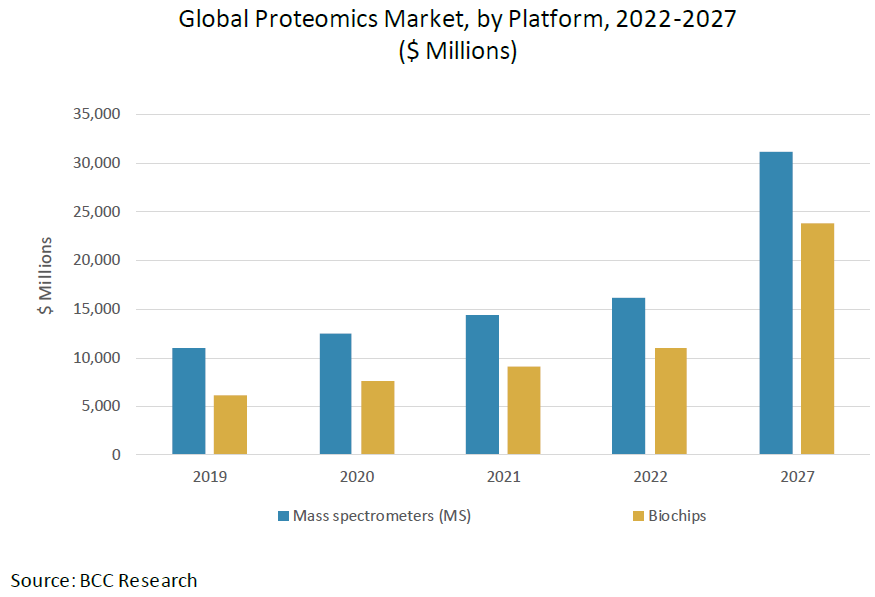
There are two main markets — mass spectrometry and protein chips — and their growth expectations are as follows


640-2.png


640-3.png


Drivers and restraints, opportunities and challenges in market growth
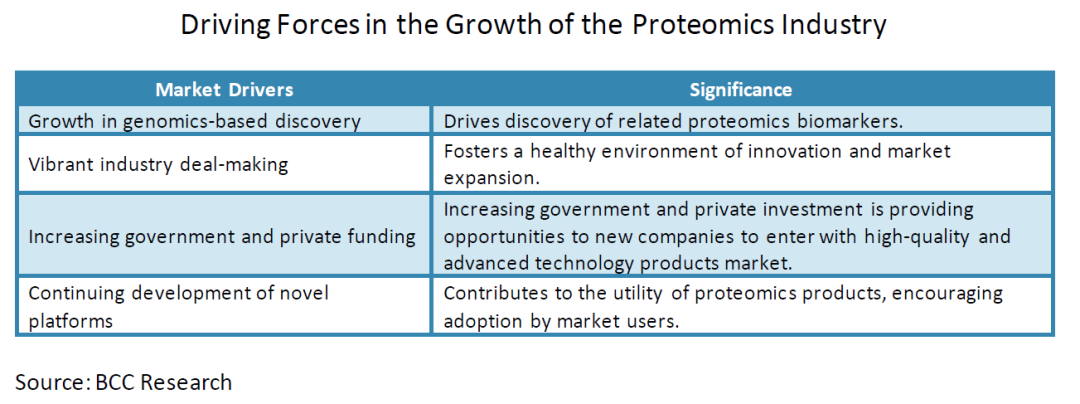

640-4.png


Drivers


Innovation and automation

Growth in innovation and the breakthroughs that automation offers over manual sample preparation make faster, higher-quality and more reproducible sequencing possible; automation has become a major factor driving the sample preparation market.


Demand for high-quality samples

The introduction of new technologies such as high-throughput sequencing and the drive to lower sequencing costs call for sample preparation that delivers higher quality, higher yield and lower cost.

Automation delivers better results

Manual sample preparation is expensive and prone to error. Automation helps avoid human error, eliminates the associated contamination, improves data quality and keeps results consistent.


The personal genomics market is booming

Personal genomics focuses on sequencing and analyzing the genome of an individual person and provides a complete description of that person's physiology. This information supports pharmacogenomics, supplying genetic information to confirm the presence of inherited disease and to select the most appropriate drug for the patient.


Restraints


Cost of equipment

The high investment cost of new sample preparation equipment and technologies produces high-cost instruments, which is one of the main constraints on the growth of instrument use in genomics and proteomics sample preparation.


High cost of complex sample preparation

As sample complexity increases, researchers will analyze it through more complex experiments, driving up the cost of sample collection and experimental design.


Market opportunities


Widespread application of genomics

As genomics advances, knowledge about rare diseases linked to a single gene and about more complex diseases linked to multiple genes is growing rapidly. This will create substantial opportunities for companies involved in areas such as genomics sample preparation.


Growing demand for proteomics

Rising demand for personalized medicine, together with heavy R&D investment in proteomics-based drug discovery programmes, is driving the growth of the global proteomics market. Proteomics can provide the accurate, sensitive diagnostic methods that personalized medicine requires and supports the development of more effective targeted drugs. In recent years, the discovery of new protein biomarkers and the development of corresponding new drugs have increased substantially in the fields of cancer, cardiovascular disease and neurodegenerative disease.


Proteins can offer a deeper understanding of disease mechanisms than genes. As advanced technologies and sequencing methods are developed, the scope of application widens further, creating opportunities for sample preparation companies in the proteomics field. Acquisitions and strategic alliances in the proteomics market also fuel its continued growth. A growing number of diagnostics-based proteomics platforms are propelling the whole industry forward, with applications ranging from cancer to infectious disease.


Challenges


Data privacy

Because genomics and proteomics reveal personal data, concerns about privacy protection confront the entire industry. Patients are cautious about donating samples even for legitimate research, which holds back the development of genomics and proteomics and, in turn, the market for sample preparation.


Scientific initiatives built on proteomics
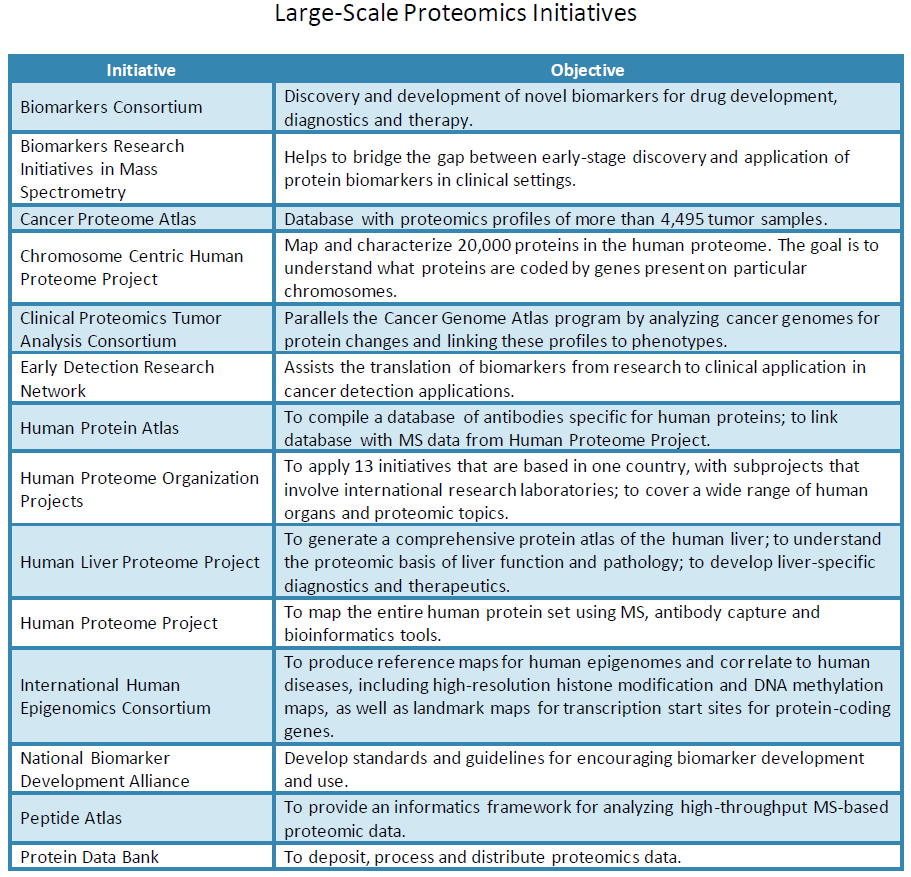

Just as the Human Genome Project helped genomics achieve major breakthroughs, large-scale scientific research in proteomics will also help drive major discoveries and advances in the field. Listed below are the major scientific initiatives in proteomics; BCC Research believes the results that accompany them will have a profound impact on proteomics in the coming years.


640-5.png


Proteomics market share by region


North America holds 38.0% of the proteomics market, making it the largest regional market, and is expected to achieve a CAGR of 13.7% over the forecast period. Europe follows with 28.8%, and the Asia-Pacific region with 19.9%. From 2021 to 2027, the Asia-Pacific region is expected to post the highest growth rate, with a CAGR of 17.0%. The rest of the world (RoW) accounts for 13.0% of the total market.

640-6.png


Patent applications by technology platform and region
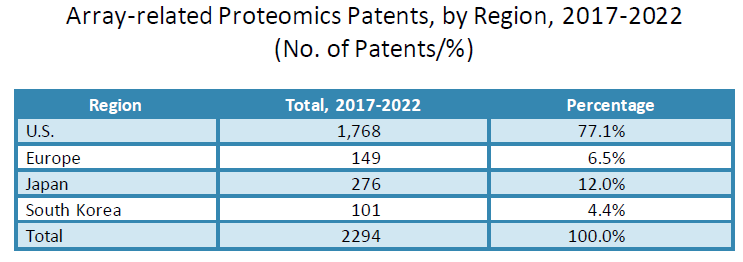

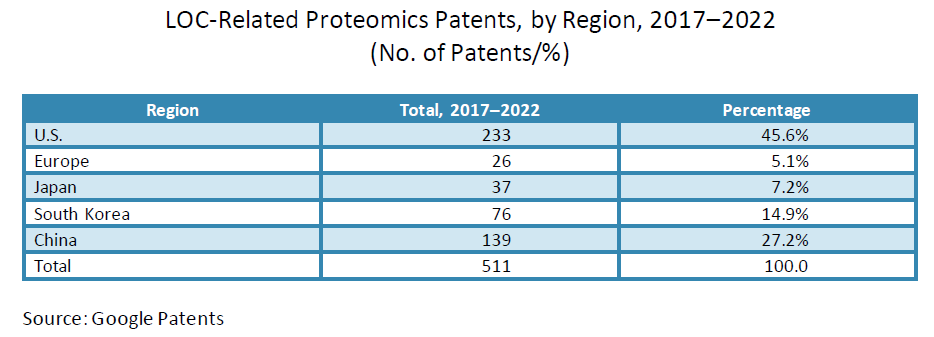
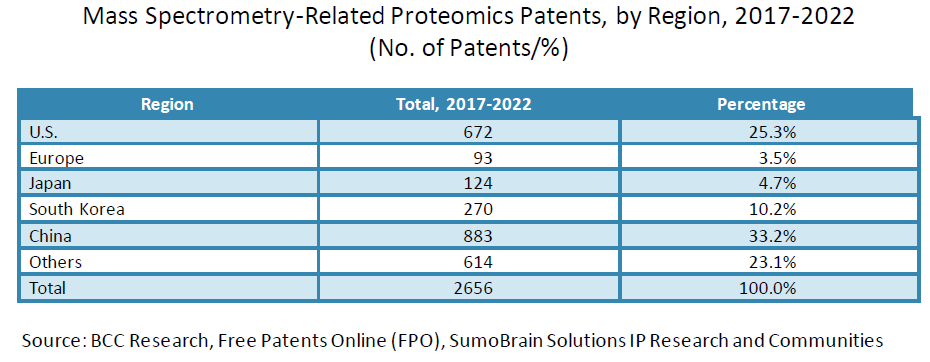
Patent activity in array-related proteomics, lab-on-a-chip (LOC)-related proteomics and mass spectrometry-related proteomics. The patent picture shows that protein array chip technology is relatively mature and dominated by the United States. Lab-on-a-chip technology is more diverse and still innovating. Mass spectrometry platform technology remains very active, with the Chinese market holding the largest share.


640-7.png

640-8.png

640-9.png


At the same time, the report provides a comprehensive analysis of the impact of the COVID-19 pandemic on the proteomics market, with detailed summaries and discussion of each technology platform segment, drug development, clinical applications, acquisitions and strategic alliances, and the competitive landscape, offering support for the development of the proteomics field.


For full report information, please visit BCC Research: Market Research Reports & Industry Analysis


Source: www.bccresearch.com


Related News
    未查询到相关记录!
Copyright © ProteinT (Tianjin) Biotechnology Co., Ltd. All rights reserved. Support by Unite talent
津ICP备17007797号-1