

Proteomics, as a means of studying the function and regulation of proteins within living organisms, has come into wide use. Combined with artificial intelligence technologies — machine learning methods in particular — it can deliver more accurate and more effective approaches to protein analysis and prediction, bringing new breakthroughs to cancer treatment. This article explores how AI supports the application of proteomics in cancer, covering proteomics data analysis, protein (peptide)–protein interactions and personalised treatment, and demonstrates its potential in cancer research through examples and results.
01 Proteomics data analysis
The foundation of proteomics research lies in the analysis of proteomics data, which is of critical importance for extracting relevant information. In proteomics data analysis, the application of AI technology spans data integration, feature extraction, model construction and more. For example, Gonçalves, Emanuel et al. (2022) used a data-independent acquisition (DIA)–mass spectrometry (MS) approach and the deep learning-based DEEBAR algorithm to analyse the pan-cancer proteome map of 949 human cell lines, successfully identifying 1,538 novel biological markers [1]. Zhang, Fangfei et al. (2020) proposed an innovative phenotype prediction technique that uses deep neural networks to analyse raw mass spectrometry data. Taking the benign versus malignant classification of 102 liver cancer samples as an example, accuracy on the test data reached 96.8% [2]. These results show that machine learning helps uncover important biological information within complex proteomics data.
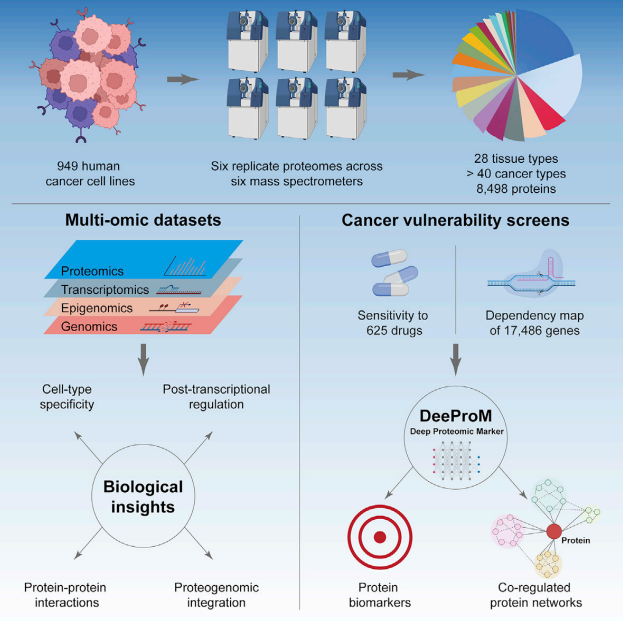
Figure 1. Workflow of the pan-cancer proteome analysis based on the
DEEBAR algorithm
02 Analysis of protein–protein interactions
Cancer is a highly complex disease involving multiple signalling pathways, in which oncoproteins play an important role and mediate a large number of carcinogenic protein–protein interactions (PPIS). Thanks to the application of AI and machine learning, PPIS networks can be constructed and analysed from large-scale proteomics data. For example, Kim, Minkyu et al. (2021) used different machine learning scoring algorithms to construct a protein interaction network related to breast cancer, leading to the discovery of several new potential targets [3].
03 Prediction of peptide–protein interactions
Interactions between peptides and proteins are of great significance for a wide range of essential cellular functions, and identifying these interactions is crucial to the discovery of cancer-related peptide drugs. At present, two main approaches are used to predict peptide–protein interactions, namely sequence-based methods and structure-based methods. These methods usually rely on machine learning techniques for feature extraction and model construction. Examples include the CGKronRLS [4] software, which adopts a kernel-based regression algorithm; the NRLMF algorithm [5] developed by Liu, Yong et al.; and the deep learning framework (CAMP) [6] proposed by Professor Zeng Jianyang of Tsinghua University and Zhao Dan.
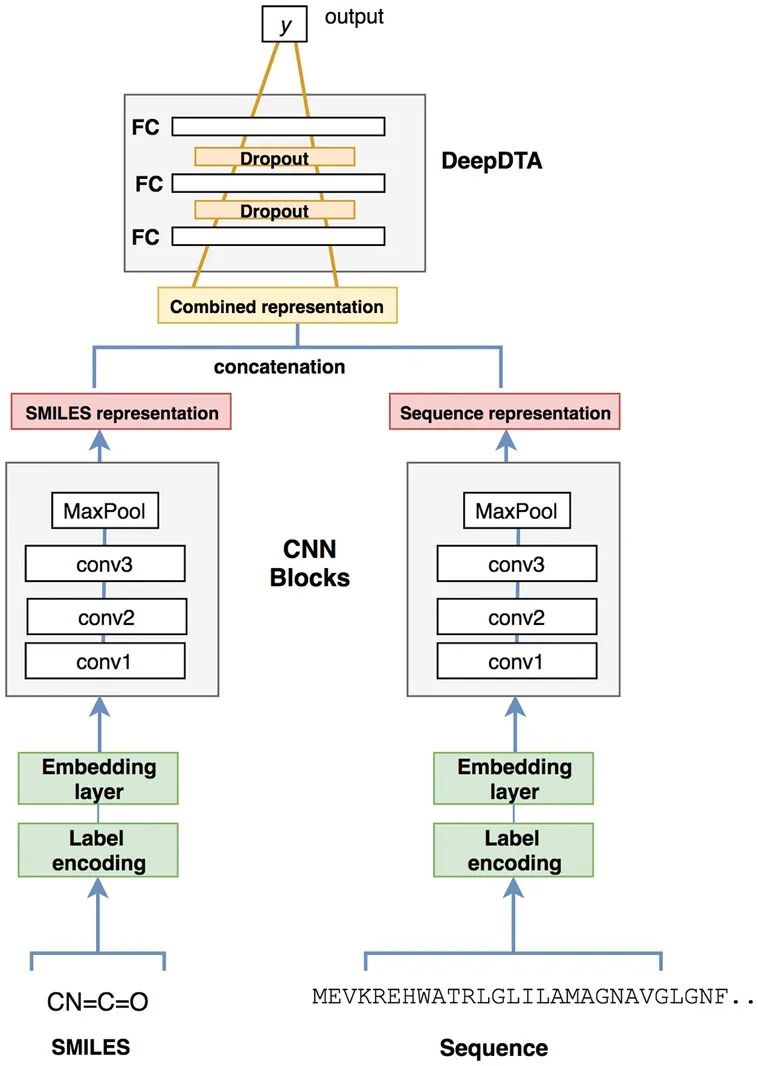
Figure 2. Workflow of the DeepDTA model
04 Personalised treatment
Personalised cancer treatment is a therapeutic strategy tailored to the individual differences between patients. Proteomics data analysis and machine learning play important roles in personalised treatment. For example, Ferrarotto, Renata et al. (2021) used reverse phase protein microarray (Revers Phase Protein microArray, RPPA) technology to perform K-means clustering on adenoid cystic carcinoma samples, established molecular subtypes, and identified therapeutic targets for each molecular subtype, thereby achieving the goal of personalised treatment [7].
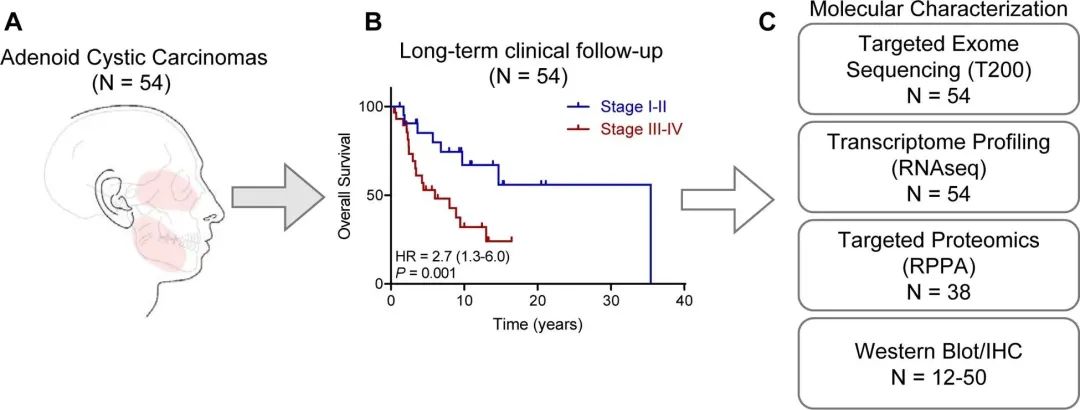
Figure 3. Workflow for molecular subtype analysis of adenoid cystic carcinoma samples
In these studies, machine learning has played a crucial role. By analysing and mining large volumes of proteomics data, machine learning algorithms can identify cancer-related protein features, predict protein interaction relationships and help determine individualised treatment plans; their efficiency and accuracy have greatly increased the success rate of cancer treatment.
Machine learning methods, however, still face several challenges in proteomics applications. First, large-scale, high-quality protein data are needed to train and validate models. Second, model design and parameter selection still require further optimisation. In addition, the interpretation and validation of machine learning results remain an important issue.
References:
1. Gonçalves, Emanuel et al. “Pan-cancer proteomic map of 949 human cell lines.” Cancer cell vol. 40,8 (2022): 835-849.e8. doi:10.1016/j.ccell.2022.06.010.
2. Zhang, Fangfei et al. “Phenotype Classification using Proteome Data in a Data-Independent Acquisition Tensor Format.” Journal of the American Society for Mass Spectrometry vol. 31,11 (2020): 2296-2304. doi:10.1021/jasms.0c00254.
3. Kim, Minkyu et al. “A protein interaction landscape of breast cancer.” Science (New York, N.Y.) vol. 374,6563 (2021): eabf3066. doi:10.1126/science.abf3066.
4. Cichonska, A. et al. Computational-experimental approach to drug-target interaction mapping: a case study on kinase inhibitors. PLoS Comput. Biol. 13, e1005678 (2017).
5. Liu, Y., Wu, M., Miao, C., Zhao, P. & Li, X.-L. Neighborhood regularized logistic matrix factorization for drug-target interaction prediction. PLoS Comput. Biol. 12, e1004760 (2016).
6. Lei, Yipin et al. “A deep-learning framework for multi-level peptide-protein interaction prediction.” Nature communications vol. 12,1 5465. 15 Sep. 2021, doi:10.1038/s41467-021-25772-4.
7. Ferrarotto, Renata et al. “Proteogenomic Analysis of Salivary Adenoid Cystic Carcinomas Defines Molecular Subtypes and Identifies Therapeutic Targets.” Clinical cancer research : an official journal of the American Association for Cancer Research vol. 27,3 (2021): 852-864. doi:10.1158/1078-0432.CCR-20-1192.
