
Alzheimer's disease (AD) is a chronic neurodegenerative disease, and early diagnosis plays a crucial role in improving patients' quality of life. Diagnosis currently relies mainly on imaging and cerebrospinal fluid biomarkers, and 67% of patients are already at the moderate-to-severe stage by the time they are diagnosed, missing the optimal window for intervention[1].As medical research advances, body fluid testing has shown great potential in AD diagnosis. Products based on cerebrospinal fluid or plasma biomarkers have been launched both in China and abroad, improving the detection rate and compliance of AD diagnosis and greatly accelerating research progress in developing body fluid-based AD biomarkers. High-impact papers continue to emerge from this line of research, further advancing the clinical translation of body fluid biomarkers for early AD diagnosis.
Case 1
Large-scale plasma proteomic analysis identifies a high-performance biomarker panel for AD screening and staging[2]
The team of Academician Ip Nancy Yuk-Yu analyzed 1,160 plasma proteins in screening and validation AD cohort samples and systematically characterized the plasma proteome of AD, identifying 19 core plasma protein biomarkers associated with AD. On this basis, the team developed a biomarker model that accurately identifies AD and determines disease severity. Compared with existing blood biomarkers used for AD classification (such as plasma ATN biomarkers, plasma p-tau181 and p-tau217), the 19-protein panel identified in this study achieved higher accuracy, with an AUC of 0.98; seven of these proteins were associated with AD stage and could be used for disease staging. The team also developed a novel blood test that enables non-invasive detection, advancing early AD diagnosis by 5–10 years, with the additional ability to assess disease stage—a development of great value for both the diagnosis and treatment of the disease.
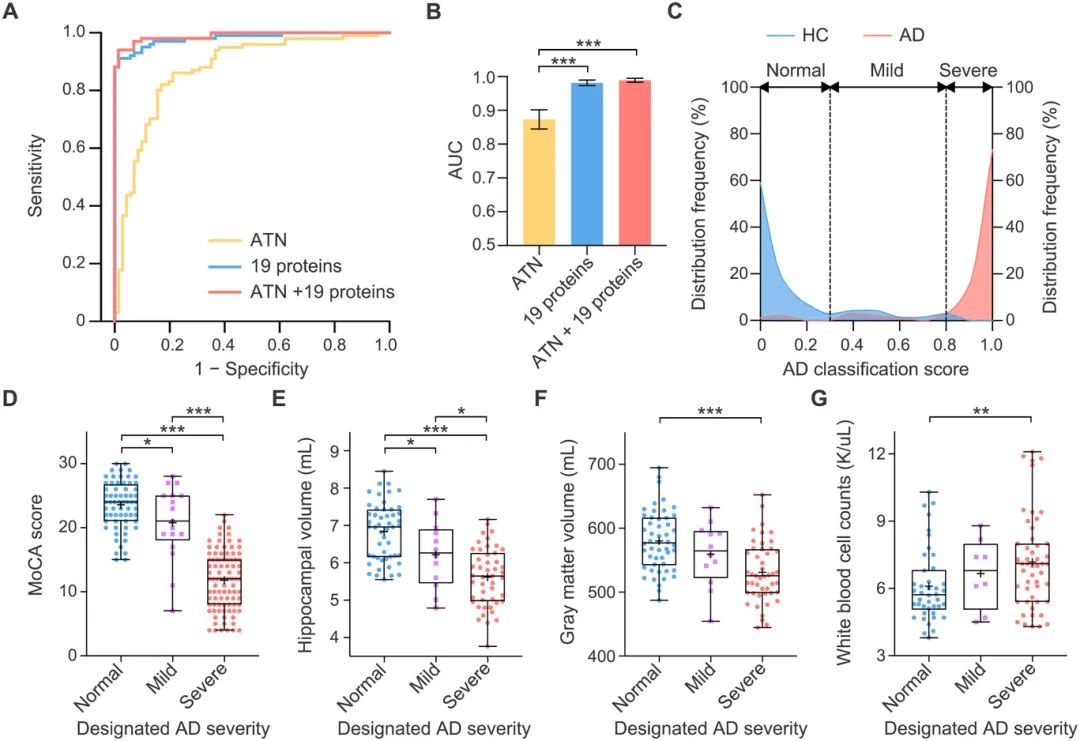
AD classification based on plasma ATNbiomarkers and the 19-protein biomarker panel
On February 19, 2024, Academician Ip's team announced that the blood test they had developed simultaneously measures changes in the levels of 21 AD-related blood protein biomarkers, enabling early detection of AD and mild cognitive impairment with accuracies exceeding 96% and 87% respectively—higher than existing blood tests based on Aβ42/40, NfL or p-Tau181. This represents critical progress in the clinical translation of blood proteomic biomarkers for AD.
Case 2
Biomarker changes during the 20 years preceding AD diagnosis[3]
The team of Professor Jia Jianping at Xuanwu Hospital, Capital Medical University, conducted a multicenter nested case–control study of AD biomarkers among cognitively normal participants in the China Cognition and Aging Study from January 2000 to December 2020. A subgroup of these participants underwent cerebrospinal fluid (CSF) testing, cognitive assessment and brain imaging every two to three years. A total of 648 AD patients were matched with 648 cognitively normal participants, and the temporal trajectories of CSF biomarker concentrations, cognitive test results and imaging findings were analyzed in both groups. Levels of CSF and imaging biomarkers in the AD group diverged from those of the cognitively normal group well before diagnosis: amyloid-β (Aβ) 42 at 18 years; the Aβ42/Aβ40 ratio at 14 years; phosphorylated tau 181 at 11 years; total tau at 10 years; neurofilament light chain at 9 years; hippocampal volume at 8 years; and cognitive decline at 6 years. As cognitive impairment progressed, the rate of change in CSF biomarker levels in the AD group initially accelerated and then slowed.
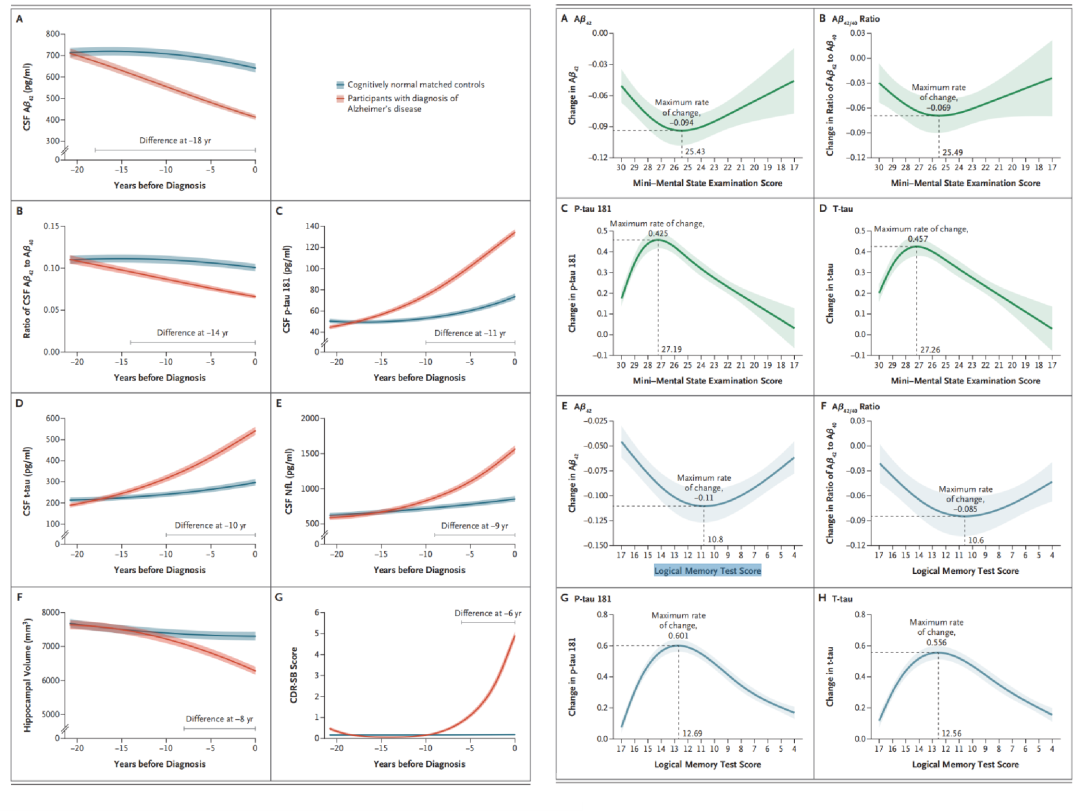
Trajectories and rates of change of biomarkers before diagnosis of AD
This study revealed for the first time the dynamic patterns of change in CSF and imaging biomarkers as AD progresses from the asymptomatic to the symptomatic stage, clarifying the key time points at which the pathophysiological changes of AD emerge. It lays a solid foundation for early AD screening and provides guidance on the therapeutic time window for new anti-AD drugs targeting Aβ and other relevant pathological proteins.
Case 3
Accuracy of a plasma p-tau217 immunoassay for the identification of AD[4]
This study drew on three cohorts: TRIAD (Translational Biomarkers in Aging and Dementia), WRAP (the Wisconsin Registry for Alzheimer's Prevention) and SPIN (the São Paulo Neurodegenerative Diseases Initiative); longitudinal follow-up data came from the TRIAD and WRAP cohorts. A total of 786 participants were enrolled, with a mean age of 66.3 years and 35.9% male. All participants had complete Aβ data, obtained by PET in TRIAD and WRAP and by CSF Aβ42/Aβ40 in SPIN.
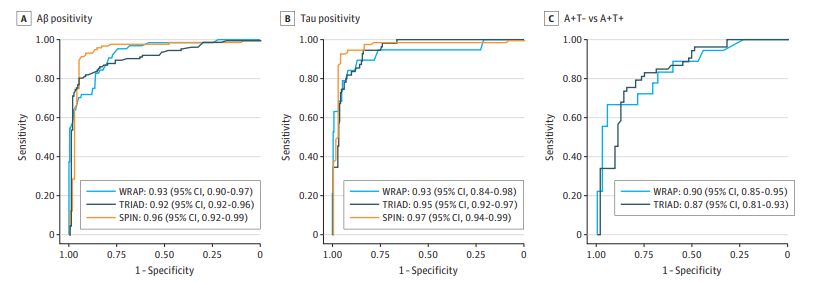
Accuracy of plasma p-tau217 in detecting Aβ and tau positivity and in distinguishing the A+T− group from the A+T+ group
Based on baseline characteristics, participants were divided into three groups: Aβ-negative and tau-negative A−T− (n = 297), A+T− (n = 66) and A+T+ (n = 29). The results showed that analyses across all three independent cohorts demonstrated the accuracy of plasma p-tau217 in identifying abnormal Aβ and tau signals, underscoring the important role of plasma p-tau217 as an initial screening tool in the management of cognitive impairment and confirming the feasibility of translating AD plasma biomarkers into clinical practice.
Case 4
Blood AD biomarker tests perform as well as or better than cerebrospinal fluid testing[5]
The team of Oskar Hansson measured plasma %p-tau217 by liquid chromatography–tandem high-resolution mass spectrometry (LC-MS/HRMS) in independent cohorts in Sweden (BioFINDER-2) and the United States (Knight ADRC), and compared its diagnostic performance with that of CSF assays approved by the FDA and used in clinical practice (Fujirebio's CSF Aβ42/40 and Roche's p-tau181/Aβ42).
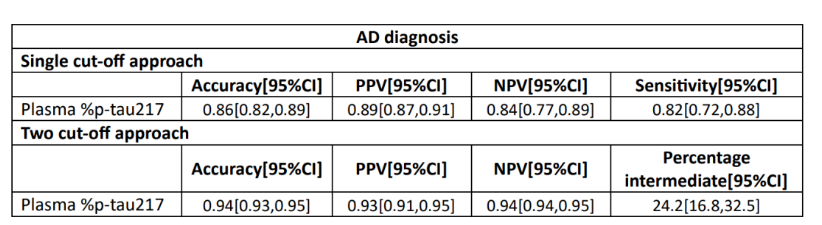
Accuracy of plasma %p-tau217 in the clinical differential diagnosis of AD
The results showed that plasma %p-tau217 performed comparably to the FDA-approved CSF assays in classifying Aβ PET status, and superiorly in classifying tau PET status. High-quality AD cohorts using different technological approaches have confirmed the clinical performance of blood protein biomarkers, demonstrating their robustness. Plasma AD biomarker testing is poised to enter genuine clinical use—an advance that would not only reduce reliance on PET or CSF testing, but also raise the detection rate of AD and allow more patients to benefit from targeted therapy.
As a leader in clinical proteomics and a provider of multi-omics technology services, ProteinT offers solutions for body fluid biomarker discovery.
A novel liquid biopsy biomarker discovery platform based on next-generation nanoparticle-enabled low-abundance protein enrichment coupled with mass spectrometry
n-LAPE/MSTM
Drawing on years of accumulated expertise in mass spectrometry, ProteinT has successfully developed n-LAPE/MSTM, a novel liquid biopsy biomarker discovery platform built on next-generation nanoparticle-enabled low-abundance protein enrichment coupled with mass spectrometry, with fully independent intellectual property rights. The company has built a library of dozens of self-synthesized, surface-modified nanomaterials that enable specific and efficient enrichment of low-abundance proteins in body fluids. Using only minute sample volumes, the platform effectively removes high-abundance proteins and enriches low-abundance ones, markedly increasing both the number of proteins identified and the quantitative signal intensity in proteomic analysis. It can process 96 samples within five hours; combined with the latest mass spectrometry platforms, more than 8,000 proteins can be detected per sample within an effective 30-minute gradient. This breaks through the bottlenecks of body fluid proteomics research and can be widely applied across clinical research and exploration in cancer, cardiovascular and cerebrovascular disease, drug target discovery and beyond, driving innovative discoveries for body fluid proteomics in liquid biopsy.
