
Recently, the team of Professor Guan Jian from the Department of Radiation Oncology at Nanfang Hospital, Southern Medical University, published a cover article in the internationally renowned journal Advanced Science (IF: 15.1), entitled "VLDL and LDL Subfractions Enhance the Risk Stratification of Individuals Who Underwent Epstein-Barr Virus-Based Screening for Nasopharyngeal Carcinoma: A Multicenter Cohort Study."Based on nuclear magnetic resonance (NMR) spectroscopy,the study performed a comprehensive metabolomic analysis of plasma samples from hundreds of nasopharyngeal carcinoma patients and Epstein-Barr virus (EBV)-infected individuals across multiple centers to explore potential risk factors for nasopharyngeal carcinoma, and further developed a risk stratification model based on an NMR risk score (NRS) for individualized risk assessment of people at high risk of nasopharyngeal carcinoma.The paper specifically acknowledges ProteinT for its support in NMR testing and analysis.
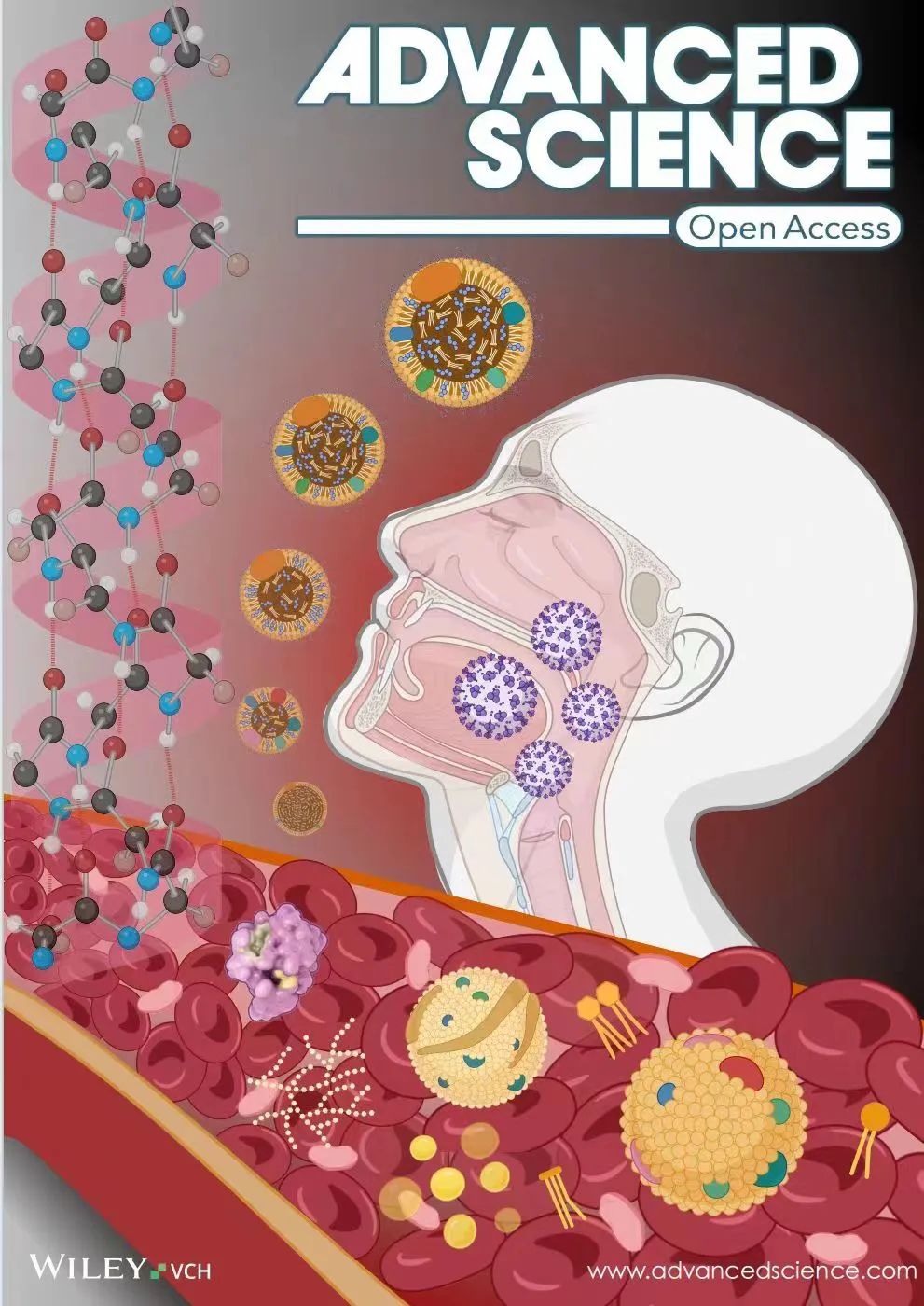
Nasopharyngeal carcinoma (NPC) is a highly metastatic and invasive head and neck cancer originating from the nasopharyngeal epithelium. In Southeast Asia and southern China, its incidence has risen sharply to 20–40 cases per 100,000 person-years. Early-stage NPC is difficult to diagnose because its symptoms are insidious and non-specific, so most patients are already at an advanced stage when diagnosed. Epstein-Barr virus (EBV) is one of the important causative factors of NPC. EBV antibody serological testing is commonly used for NPC screening, but its positive predictive value (PPV) is only about 4%. There is therefore an urgent need for a test that combines high specificity with cost-effectiveness in order to screen effectively and accurately identify individuals at high risk of NPC.
|Methods|
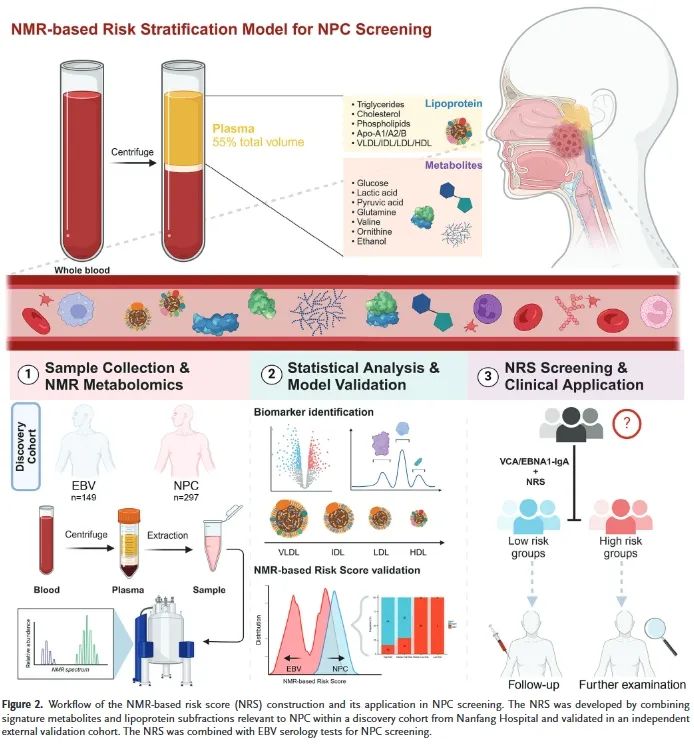
From June 2019 to September 2022, Nanfang Hospital recruited 297 NPC patients (NPC cohort) and 149 healthy controls with positive EBV serology (EBV cohort) as the discovery cohort.NMR was used to quantitatively analyze 38 plasma metabolites and 112 lipoprotein subfraction parameters in participants' plasma samples, comprehensively characterizing the metabolic profile changes in the two cohorts, screening for potential metabolic biomarkers closely associated with NPC, and developing a risk stratification model for nasopharyngeal carcinoma.At the same time, 84 NPC patients and 53 EBV-positive controls were recruited at two hospitals in a high-incidence area of Guangdong Province as a validation cohort for independent external multi-center validation.
|Results|
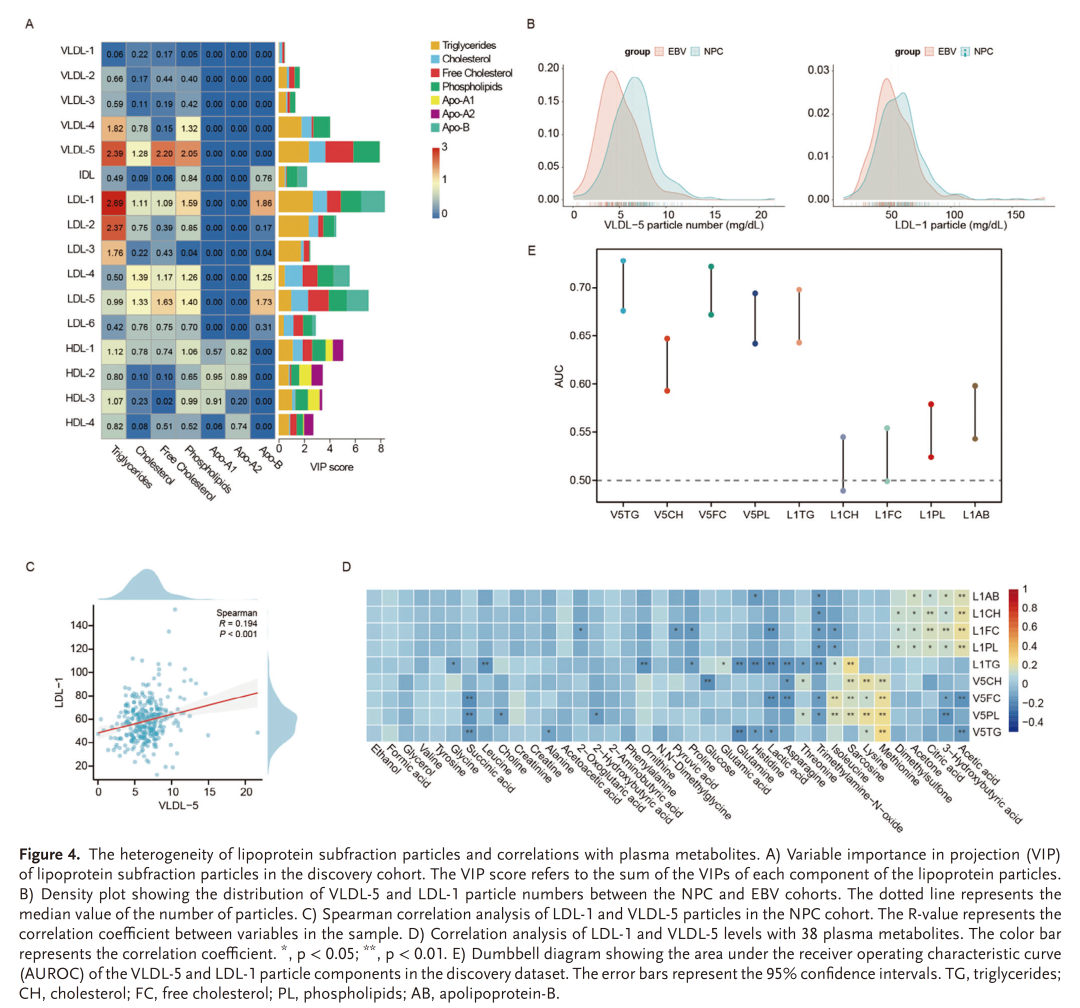
Significant differences were found between the metabolic profiles of the NPC and EBV groups, with lipid metabolism particularly prominent; the small, dense very low-density lipoprotein (VLDL-5) subfraction particle components and the large, buoyant low-density lipoprotein (LDL-1) subfraction particle components are important cancer-promoting factors in the development of nasopharyngeal carcinoma.Both VLDL-5 (triglycerides, TG; cholesterol, CH; free cholesterol, FC; phospholipids, PL) and LDL-1 (triglycerides, TG; cholesterol, CH; free cholesterol, FC; phospholipids, PL; apolipoprotein B, ApoB) particles showed significant VIP values (VIP > 1) and were clearly increased in the plasma of NPC patients. Correlation analysis with metabolites showed that LDL and VLDL subfraction particles were positively correlated with metabolites involved in carbohydrate or amino acid metabolism, suggesting that they may participate directly or indirectly in these metabolic processes, although the specific mechanisms remain to be explored. ROC analysis of the structural components of LDL-1 and VLDL-5 particles showed satisfactory AUC values, indicating great potential as biomarkers for nasopharyngeal carcinoma. The discovery cohort also revealed alterations in plasma metabolite profiles and metabolic reprogramming in the NPC cohort, and eight differential metabolic markers were screened out that could significantly distinguish the NPC cohort from the EBV cohort; enrichment analysis indicated that they mainly cause metabolic disorders related to glucose metabolism, such as the Warburg effect, pyruvate metabolism and glycolysis.
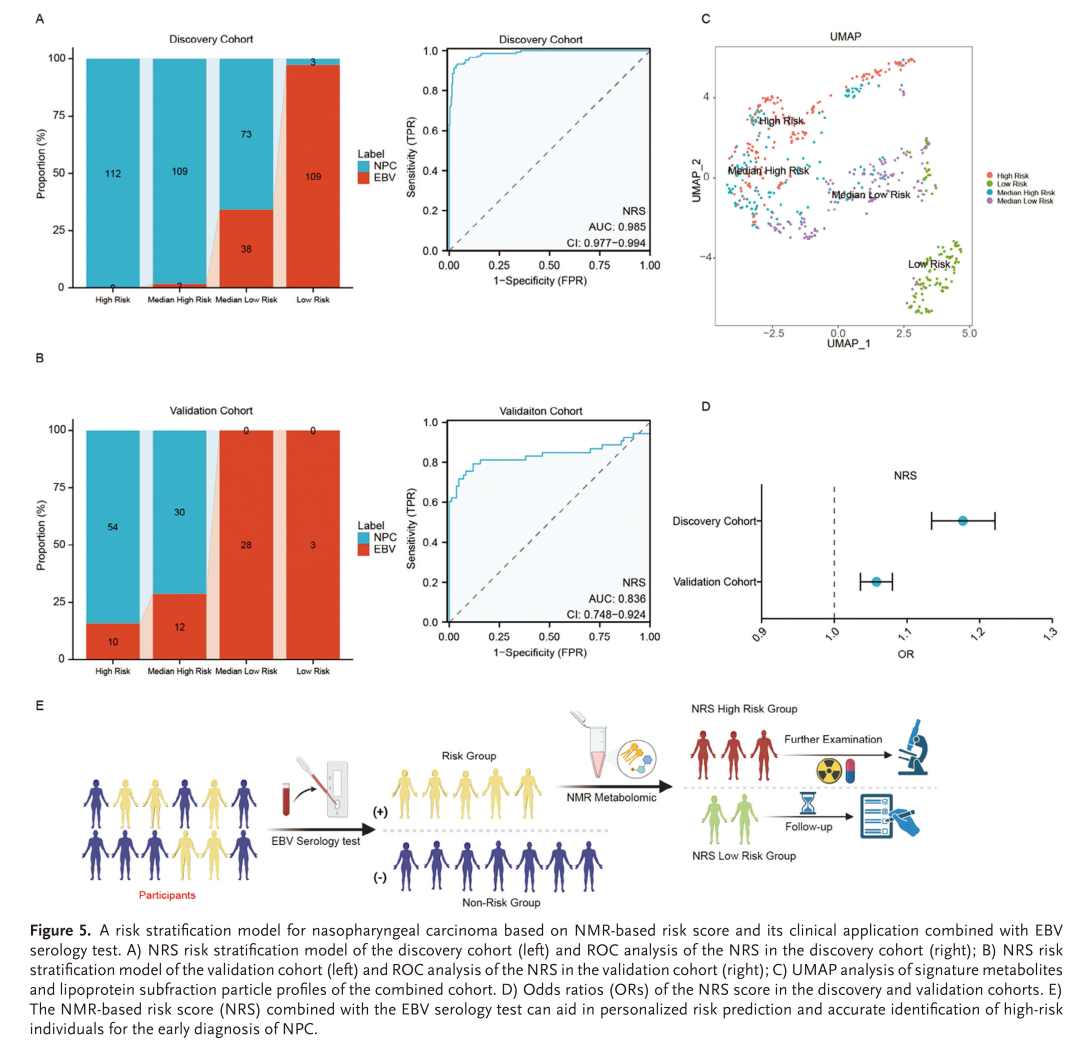
Based on the characteristic metabolic markers identified in the discovery dataset, five metabolites (glucose, lactate, pyruvate, methionine, ornithine), four components of VLDL-5 particles (triglycerides, cholesterol, free cholesterol and phospholipids) and three components of LDL-1 particles (triglycerides, phospholipids and ApoB) were finally selected as model factors toconstruct a risk stratification model based on the NMR risk score (NRS). The AUC in the discovery cohort was 0.985 (95% CI: 0.977–0.994). Validation using the independent validation cohort gave an AUC of 0.836 (95% CI: 0.748–0.924). To evaluate the potential of NRS for NPC screening, NRS was combined with EBV antibody serological testing; when the NRS median (N50) was used as the cut-off value, the combined NRS performed best (AUC: 0.841, 95% CI: 0.811–0.871), with both sensitivity and specificity above 0.80 (PPV: 0.7008; NPV: 0.9271; Youden index: 0.6817).
|Conclusions|
This study reveals for the first time the close association between plasma lipid metabolic disturbance and tumorigenesis in nasopharyngeal carcinoma patients. At the same time, it innovatively reports a risk stratification model built on characteristic plasma metabolites and lipoprotein subfractions which, when combined with standard EBV antibody serological testing, can stratify the risk of nasopharyngeal carcinoma patients effectively and accurately. It offers a new direction for early screening and prevention of nasopharyngeal carcinoma and is expected to bring better clinical benefit to people at high risk of the disease.
ProteinT NMR Testing Service
NMR is an ideal analytical technique that allows non-invasive, non-destructive and quantitative investigation of molecular structure, dynamic processes and chemical reactions. A large body of literature confirms that NMR is an irreplaceable tool for detecting low-density lipoprotein particle (LDL-P) subfractions, and the role of LDL-P in the early warning and treatment monitoring of atherosclerotic cardiovascular disease (ASCVD) has been extensively reported: the smaller and more numerous the lipoprotein particles, the higher the risk of atherosclerosis. This technology has been approved abroad and is recommended by authoritative guidelines and consensus statements in China and internationally.ProteinT is the first to introduce internationally leading NMR spectroscopy technology into China and apply it clinically, addressing the current pain point that conventional lipid markers lack precision.Thanks to its stable performance, ProteinT has established a fully automated standard platform featuring simple sample preparation, automatic data acquisition and processing, automatic generation of quantitative reports, and no requirement for specialized NMR expertise.
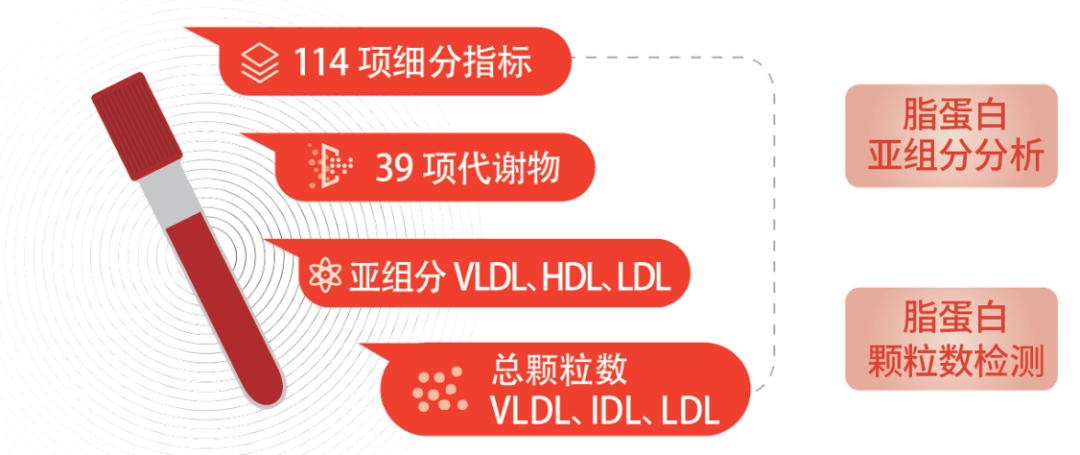
ProteinT NMR testing items and their clinical applications
At the same time, NMR can be applied to the analysis of urinary metabolite information. Supported by biomedical expertise and exclusive database management, it enables the creation of personal health management records and comprehensive personal health management from multiple perspectives—body, psychology, food, disease and lifestyle. This approach provides a powerful research tool for clinical studies of metabolic syndrome, cancer, diabetes, kidney disease and other conditions, and serves as strong support for ProteinT's gene–protein–metabolism multi-omics platform.
