
Based on the latest data from cancer registration and follow-up monitoring, the National Cancer Center published the burden of malignant tumours in China in 2022 in JNCC.
Cancer incidence and mortality in China, 2022
New cases: 4.8247 million
Age-standardised incidence rate (world standard population): 201.61/100,000
Age-standardised mortality rate (world standard population): 96.47/100,000
Age-standardised incidence and mortality rates are both higher in men than in women
(incidence: 209.61/100,000 vs 197.03/100,000; mortality: 127.49/100,000 vs 67.81/100,000)
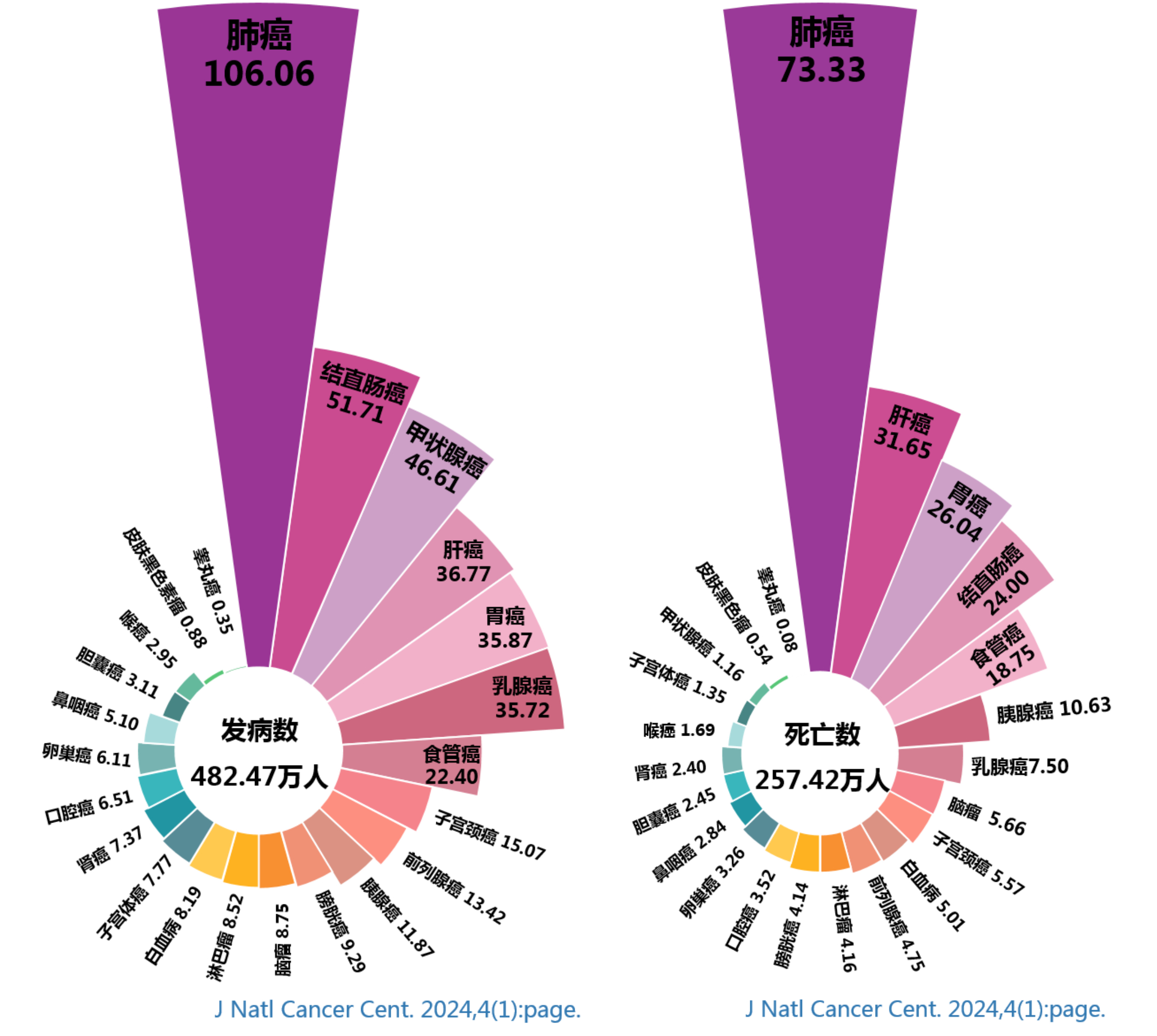
Number of new cancer cases in China, all cancer types Number of cancer deaths in China, all cancer types
(10,000 people) (10,000 people)
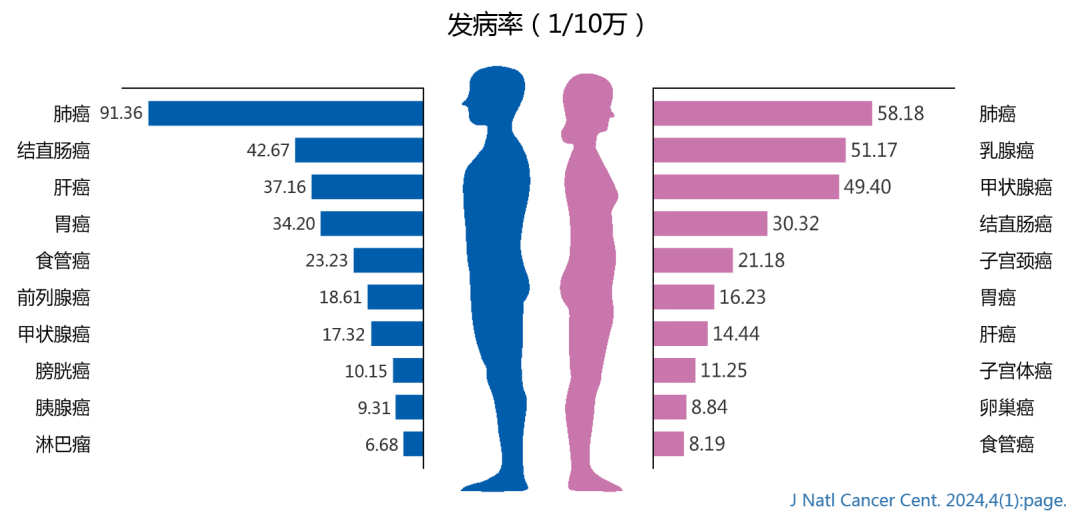
Top ten malignant tumours by incidence and ranking in Chinese men and women
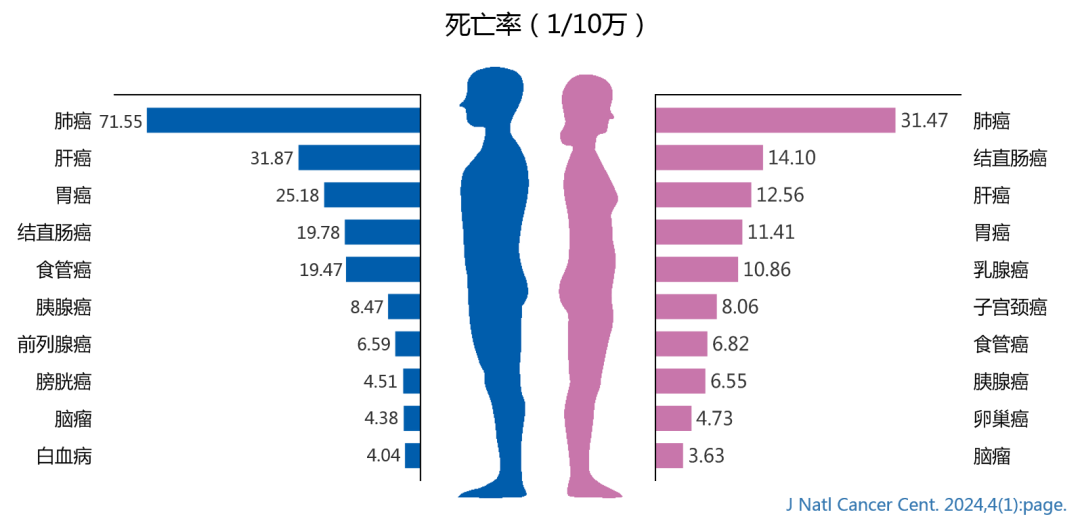
Top ten malignant tumours by mortality and ranking in Chinese men and women
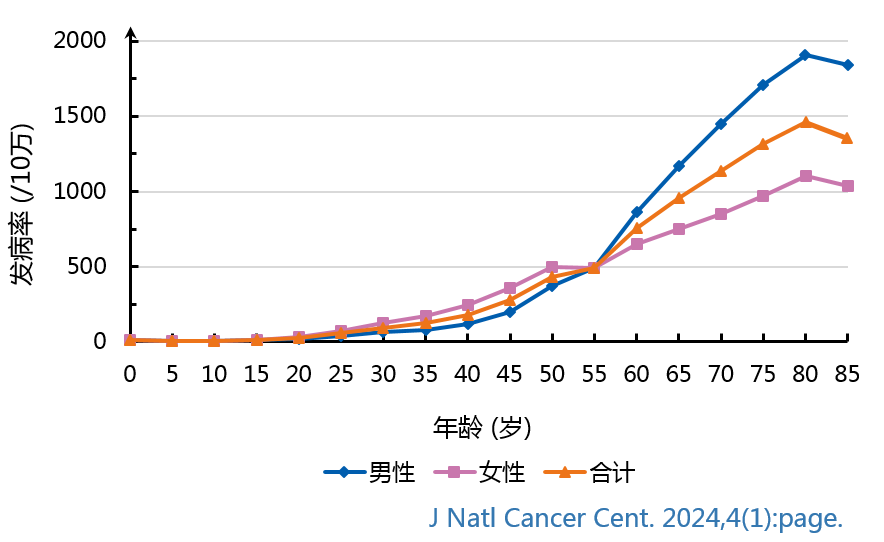
Age distribution of malignant tumour incidence in China
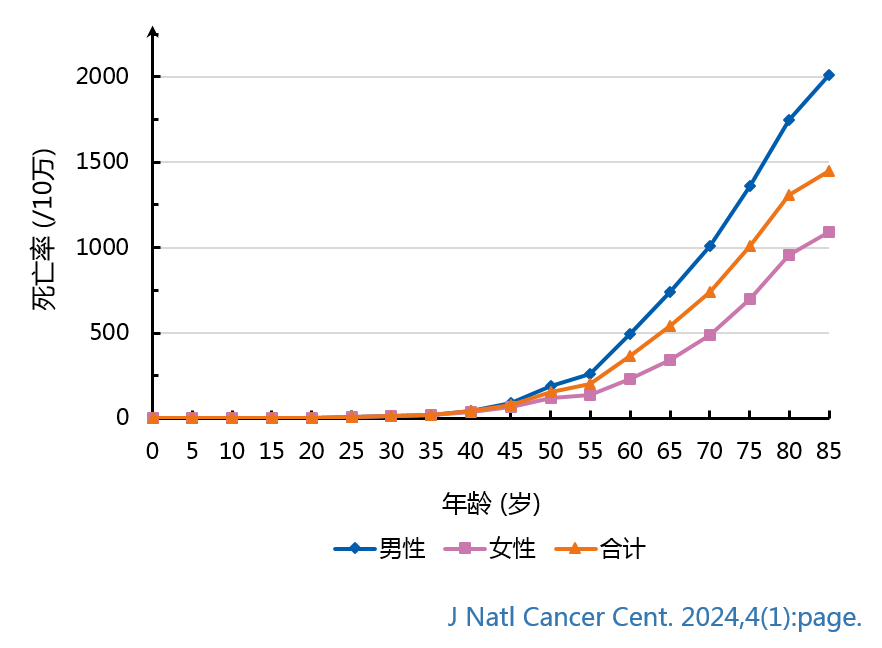
Age distribution of malignant tumour mortality in China
Cancer in China, 2000–2018
incidence and mortality trends
All cancer typesage-standardised incidence rateincreased by an average of 1.4%
per year. Rising:
Men: thyroid, prostate and colorectal cancer
Women: thyroid, cervical, uterine corpus, lung and breast cancer
Falling:
Men and women: oesophageal, gastric and liver cancer
All cancer typesage-standardised mortality ratedeclined by an average of1.3%
per year. Rising:
Men: prostate, colorectal and pancreatic cancer
Women: cervical and ovarian cancer
Falling:
Men and women: oesophageal, gastric and liver cancer
Summary
At present, the number of new cases and deaths from malignant tumours in China continues to rise, and the annual medical spending caused by malignant tumours exceeds 220 billion yuan. The urban–rural analysis shows thatincidence is slightly higher in urban areas than in rural areas, while mortality is slightly higher in rural areas than in urban areas, but the difference in malignant tumour incidence and mortality between urban and rural areas is gradually narrowing.
Over the past ten years and more,the survival rate of malignant tumours has shown a gradual upward trend, and the current 5-year relative survival rate for malignant tumours in China is about 40.5%,an overall improvement of about 10 percentage points compared with ten years ago, but there is still a large gap with developed countries. The main reasons for this gap are the small number of early-stage cases seen in clinic, the low early diagnosis rate and the non-standardised diagnosis and treatment of late-stage cases.
China should therefore push on two fronts — expanding the coverage of screening, early diagnosis and early treatment for relevant tumours, and promoting the standardised and homogeneous application of clinical cancer diagnosis and treatment — in order to reduce malignant tumour mortality.
