
— Chair of the Human Proteome Organization Urine Proteome Initiative (HUPO UPI), School of Life Sciences, Beijing Normal UniversityProfessor Gao YouheExclusive Interview
When ordinary people go to hospital, the test they know best is the routine blood test, which reflects disease through abnormal indicators in the blood — inflammation somewhere in the body, for example. Yet by the time abnormal blood indicators reflect a disease, the condition has often already become quite serious. Drug treatment is still possible, but the best window for treatment may already have been missed. For some intractable conditions in particular, using abnormal blood indicators to signal disease is simply "too late". The medical community is calling for a screening technology that can detect disease earlier than existing blood tests, so that diagnosis and intervention can come earlier, before the body has suffered serious harm.
To solve this problem, a new wave of "urine research" has emerged in scientific research in recent years. Recently, the Initiative of the China Urine Plan (hereinafter the "Initiative") was published in Science China Life Sciences. It was drafted through joint discussion by more than a hundred scholars, written jointly by Professor Gao Youhe of the School of Life Sciences at Beijing Normal University, Researcher Sun Wei of the Institute of Basic Medical Sciences at the Chinese Academy of Medical Sciences, and Assistant Researcher Wu Jianqiang of Peking Union Medical College Hospital, and signed jointly by more than 110 scholars. The Initiative states that the China Urine Plan is being carried out chiefly in order to "conduct comprehensive and systematic research into the various components of urine, establish a database shared among its members, and lay the foundation for early, precise and personalised diagnosis of disease in the future."
What is the China Urine Plan? Why has it attracted the attention of so many scholars? Recently, Antpedia visited the School of Life Sciences at Beijing Normal University to interview Professor Gao Youhe, one of the initiators of the China Urine Plan.
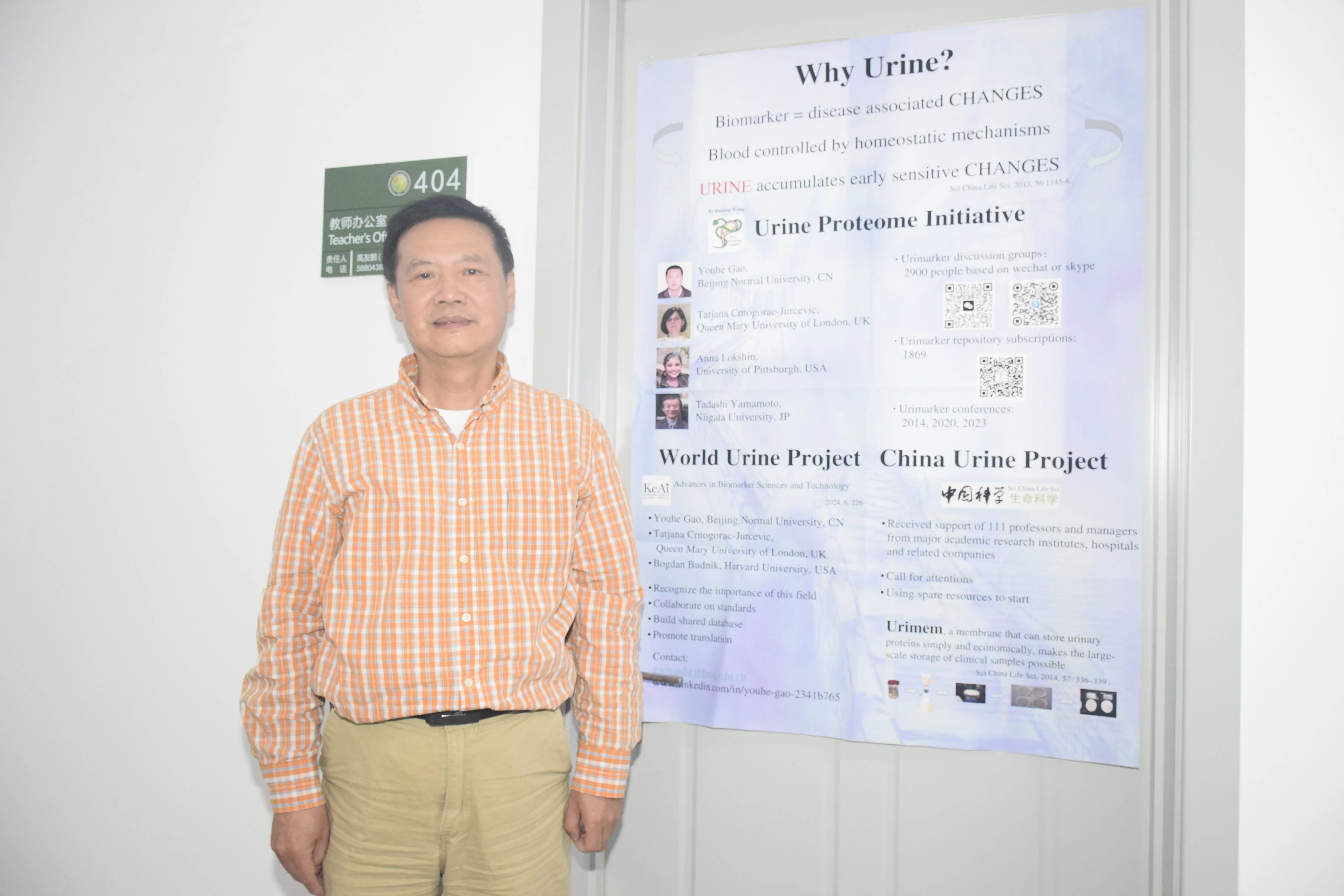
Gao Youhe, Chair of the Human Proteome Organization Urine Proteome Initiative (HUPO UPI) and Professor at the School of Life Sciences, Beijing Normal University
Urine biomarkers: removing the interference of homeostatic mechanisms, giving earlier warning and eliminating disease before it takes shape
As described at the opening of this article, in medical practice blood tests — the principal indicators used for disease diagnosis — face the difficulty that they "cannot detect any earlier". Why is this? Research going back a hundred years has already shown that human blood is subject to homeostatic mechanisms: through a series of regulatory measures, the body keeps the various components and physicochemical properties of the blood, as well as the blood circulation system, in a relatively stable state. Under the influence of homeostatic mechanisms and its own immune function, the body maintains for as long as possible the illusion that "I am perfectly fine". Once homeostatic mechanisms stop working, problems throughout the body erupt all at once, and in extreme cases become very serious — advanced cancer being a common example. Sadly, with the medical means available today, once the disease has reached this stage, patients often face a situation beyond recovery, and there is no longer time to extend their lives. Early detection and early treatment are therefore especially important.
"Urine, as an excretion of the human body, is often regarded as waste of little value.But in fact urine contains large numbers of biomolecules of every kind, including proteins and metabolites, and is an ideal subject for the study of biomarkers for the 'pre-early' diagnosis of disease." said Gao Youhe. The so-called "pre-early" stage is defined relative to the "early" stage in current medical practice: it means diagnosing the disease before it erupts to the point where it can no longer be controlled, so that treatment can be given earlier and the disease disappears before it ever breaks out.
Why is it that urine research can detect disease at the "pre-early" stage? Gao Youhe explained: compared with blood, urine is an excretion derived from the blood, and is the cleanest, most direct and most stable source of sample. It is not subject to regulation by homeostatic mechanisms, and it is closely connected with every part of the body. It is not stored in the body and there is no homeostatic mechanism, so the various markers in urine best reflect the true state of the body at that moment. Therefore, if the markers in urine corresponding to a disease can be found, the disease can be detected through urine testing while the blood has not yet shown any abnormality, making early diagnosis and early treatment possible and preventing the disease from deteriorating. "Research on urine biomarkers will become a major innovative breakthrough in the field of medical diagnosis," said Gao Youhe. "For doctors, it makes it possible to judge at a pre-early stage whether a patient's disease needs intervention, whether medication is required, and to treat or slow the progress of the disease; for patients it is even more welcome news, because a disease may be detected when it has only 'just begun to sprout', and there will be fewer and fewer cases that prove hard to cure because the disease was found too late."
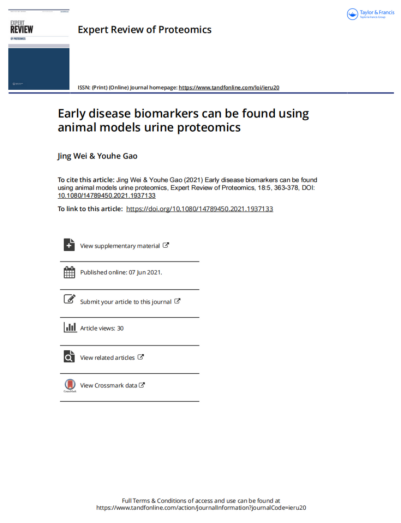
Research findings: early-stage disease biomarkers can be discovered using urinary proteomics in animal models
Significant progress has already been made in the field of urine research, for example in studies of Alzheimer's disease, depression, cancer, and common conditions such as coronary heart disease and diabetes. Research shows that in the early stage of a disease, each disease has corresponding markers in urine, confirming that urine markers can reflect functional changes at the tissue level across a range of diseases at an early stage. "Urine markers offer the advantages of immediacy, freedom from interference, and being non-invasive and easy to obtain. They have an important influence on biomedical research and human health, and will therefore become a highly sought-after focus of disease diagnosis and treatment research in the future," said Professor Gao Youhe. On this basis, more than a hundred scholars, including Professor Gao, jointly launched the China Urine Plan, with the aim of raising public awareness of the importance of urine research, drawing more people in the field to take part, and jointly driving the development of the discipline.
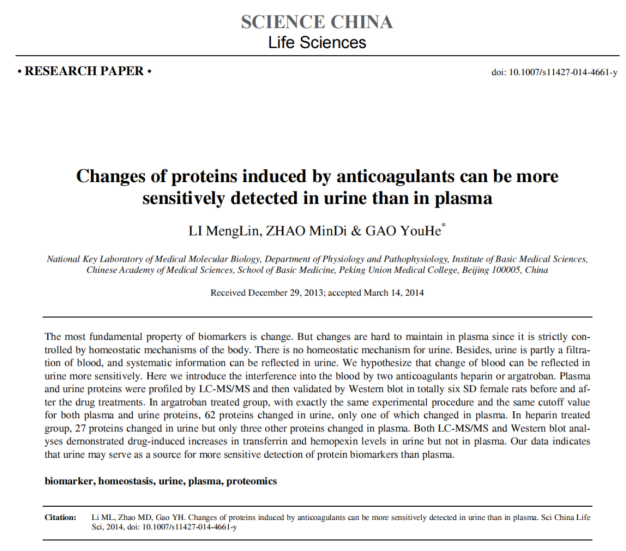
Research findings: protein changes caused by anticoagulants are more sensitively reflected in urine than in plasma
Twenty years of urine biomarker research
From idea to validation
More than twenty years ago, Professor Gao Youhe and his team noticed that urine can gather a large number of disease-related changes and can better reflect small changes at an early stage. At that time, blood proteomics research was in vogue, so it was essential to demonstrate the feasibility and necessity of research into urine biomarkers. "Human urine is simple and easy to obtain, but individual differences in human habits — diet and daily routine, for example — cause the composition of substances in this sensitive fluid to vary; or, to put it another way, even if a disease signal is found, one cannot be sure whether the disease is triggered by a single substance or by the interplay of several. We therefore chose to build animal models to study urine biomarkers, in order to demonstrate the feasibility and advantages of urine research," said Professor Gao Youhe. Two groups of animals were placed in the same environment, one of them serving as the disease research subject. From the moment the animals were confirmed to be ill, the development of the disease was followed without intervention and the changes in urine markers were recorded; these were then compared with the urine markers of the other, healthy group of animals. The patterns of change were observed, and it was finally established that urine can indeed reflect the small changes occurring in the early stage of a disease.
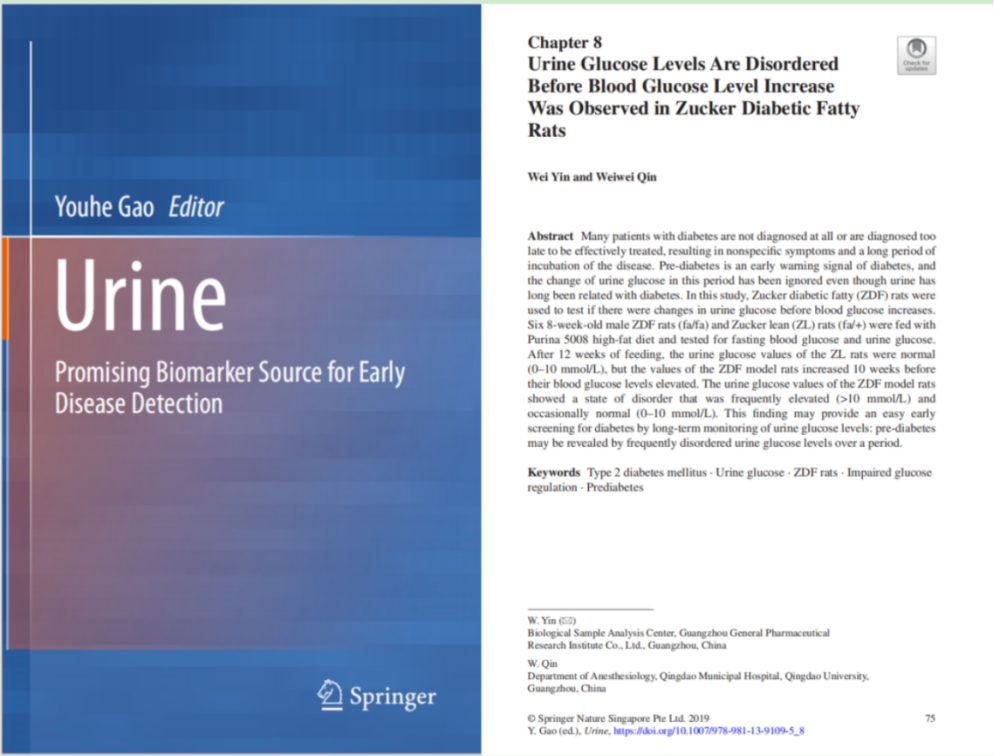
Research findings: in diabetic fatty rats it was observed thatbefore blood glucose levelsrose, urinary glucose levels had already become disturbed
After many years of effort, Professor Gao Youhe's team has successfully completed studies of dozens of disease models and of various organ disease types, including liver fibrosis,pulmonary fibrosis,tumours and Alzheimer's disease, identifying the urine markers corresponding to each type of disease together with their patterns of change, and directly demonstrating the effectiveness of urine marker research for early diagnosis of disease in humans.
Urine sample preparation device in Professor Gao Youhe's laboratory
The evidence was there — but a new problem appeared! Urine biomarker research usually runs from a state of health through to the diagnosis and treatment of disease, and each research subject's urine needs to be kept continuously for years for comparative study, so that changes in sample markers can assist diagnosis. This means not only that the volume of urine samples is large, but also that without suitable space for storage they are prone to deterioration. So how can urine markers be preserved? Considering cost, ease of storage and ease of preservation, Professor Gao Youhe's team developed a method in which the proteins in urine are adsorbed onto a specially prepared membrane, which is then dried and vacuum-sealed, achieving simple, economical and long-term stable preservation of urine samples. "This method not only lowers storage costs, it also reduces the demand for space, while slowing protein degradation in the samples, providing an efficient and feasible solution for establishing urine sample banks," said Professor Gao Youhe.
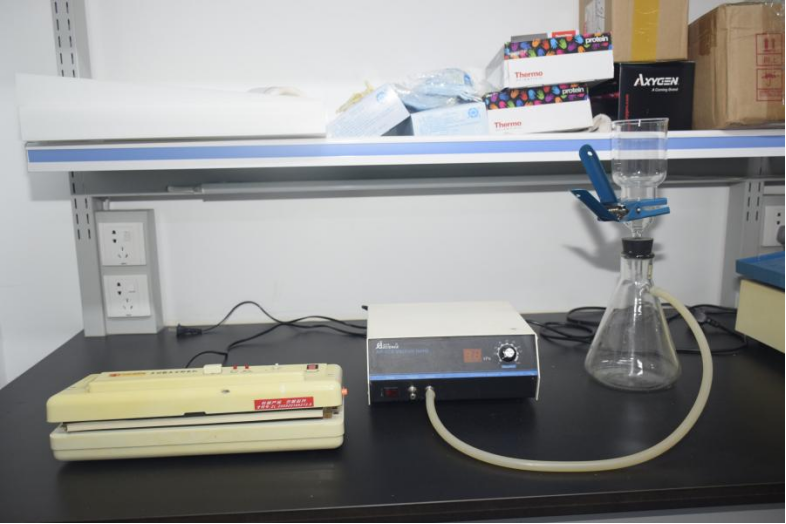
Urine sample preparation device in Professor Gao Youhe's laboratory
Apart from water, the urine of healthy people is composed mainly of inorganic salts (including sodium, potassium, chlorine, calcium and phosphorus) and organic substances (urea, uric acid, creatinine and so on). Where a specific disease is present, the urine may contain large amounts of glucose (in patients with diabetes, for example), albumin (in patients with kidney disease), and white and red blood cells (in urinary tract infectionor tumour, for example). "The composition of urine is diverse: not only proteins can serve as research markers, other components can serve as markers too. Mass spectrometry, which is commonly used in multi-omics methods, is the ideal core instrument, and combined with high-throughput automated urine processing equipment it is the golden partner for urine biomarker research. Advances in other analytical instruments can also support urine biomarker research, but they must at the same time meet the requirements of high-throughput sample processing and high-throughput identification," said Gao Youhe.
Professor Gao Youhe is full of confidence and expectation for the implementation of the China Urine Plan. He noted that over the course of 20 years it has been demonstrated that changes in urine markers occur earlier than symptoms, signs, imaging findings and pathological changes, laying the foundation for early, precise and personalised diagnosis of disease. At the same time, an economical and effective method for storing urine samples has been found. Combined with the analytical techniques available today, research on urine biomarkers is ready to be rolled out in full — all that is needed is for more like-minded colleagues in the field to join in and contribute. They hope to attract more people and institutions who are interested in urine research and recognise its value, to pool resources and wisdom, to carry out broad and deep collaboration, and to build a shared database, thereby making a greater contribution to the cause of human health.
The China Urine Plan: calling on more research teams to move forward together
The Initiative shows that the China Urine Plan is expected to be completed in three phases: the first phase, from 2025 to 2029, will complete urine-based omics analysis of the healthy Chinese population; the second phase, from 2030 to 2034, will complete urine-based omics analysis of major common diseases in China; and the third phase, from 2035 to 2039, will use urine-based omics analysis to explore important scientific questions such as ageing. Regarding the phased goals set for the China Urine Plan, Professor Gao Youhe noted that, in a sense, research into urine markers is an innovative scientific field. At present, research on urine markers has yet to reach scale anywhere in the world, but previous results have already demonstrated the enormous impact it may have on disease diagnosis in the medicine of the future, and it may even change the way human health is managed.
As one of the first people in the world to put forward the idea of a "urine plan", Professor Gao Youhe believes that China has been working in this area for more than twenty years — earlier than scholars in any other country — and has accumulated richer results. In the field of urine biomarker research, therefore, China is to some extent at the forefront of the world. Building on this advantage, Chinese scholars have great scope in this field in the future, and it is no extravagant hope to win a place for China's medical community in the world. "That is why we have set a number of phased goals: to encourage more people with the commitment to join this plan and jointly advance the development of biomedical research," said Professor Gao Youhe.
The implementation of the China Urine Plan has accumulated advantages behind it, and opportunities ahead of it. Professor Gao Youhe believes that with the development of high-throughput sequencing technologies and bioinformatics, researchers can gain a deeper understanding of the composition of urine and the patterns by which it changes. This will help in the discovery of new biomarkers and potential therapeutic targets, and will drive forward early diagnosis and individualised treatment of disease.
The emergence of something new follows naturally once conditions are right, but the difficulties of putting it into practice still have to be faced. "Innovation meets with a great many difficulties — original innovation in particular — and for all sorts of reasons it may not win the recognition of one's peers in the short term," said Professor Gao Youhe. As an innovative research direction, the China Urine Plan will certainly encounter difficulties of every kind in the course of its implementation — traditional ways of thinking, the level of recognition, and so on.
On urine research, the materials and literature available worldwide are relatively limited at present. This means that scientists and doctors working in this field face enormous challenges, and often have to spend many years before achieving significant results. With no ready-made studies to refer to, many aspects — experimental design included — have to be explored independently, which deters many people. This is precisely one of the main difficulties encountered in implementing the China Urine Plan.
At the same time, however, he points out that innovation is the best way to solve this problem! At present, proteomics and metabolomics have come to dominate biomedical research internationally and have achieved a great deal; researchers trying to shift their research direction is also an effective way to achieve a breakthrough. He firmly believes that now is the best time to launch research into urine biomarkers, and that the future holds the promise of abundant results in this field and a place at the forefront of the world.
Implementing the China Urine Plan requires not only that researchers break out of established ways of thinking; it also cannot do without the acceptance of the people being studied. Research on urine markers is a combination of basic research and clinical medicine, and requires healthy people to provide samples continuously from a very early stage. Usually, however, people find it hard to accept undergoing this kind of test while they are healthy. This too means that people need to understand how important urine marker research is to their health. "On this point, we set a target for the first phase: to collect no fewer than 20,000 urine samples from healthy people with comparatively detailed health check results. Since many people need a health check every year, winning the agreement of 20,000 people is not especially difficult. Everything needs to proceed step by step. In the future, more people will certainly pay attention to their own health and join our plan," said Professor Gao Youhe.
Professor Gao Youhe pointed out that research on urine markers is still at a preliminary stage, and that compared with other fields such as blood markers it lags considerably behind in research output, scale of research, funding input and policy support. He is, however, full of confidence, believing that as research deepens, urine research will gradually attract more attention and support, in the same way that proteomics has. He stressed: "This is important work, closely connected to human health."
Close cooperation among three parties — research institutions, hospital doctors and patients — is one of the necessary conditions for the successful implementation of the China Urine Plan. This ambitious plan, however, still lacks one key factor: advanced research instruments. To obtain research results quickly and accurately, no scientific research can do without the support of high-quality scientific equipment. Professor Gao Youhe therefore calls on instrument manufacturers, distributors and third-party testing institutions to take an active part in the China Urine Plan, and to work together to develop more specialised analytical tools and methods for urine biomarker research, thereby accelerating the development of the plan and improving the efficiency of its implementation.
"There are many difficulties, but we will overcome them together and jointly advance the implementation of the China Urine Plan. At present we have built a number of experimental systems and achieved certain research results; if friends wish to exchange ideas with us, we will tell them all we know; if research facilities are lacking, we can build a bridge between scholars and those who own the instruments. In short, in the face of difficulties we will move forward hand in hand and overcome them together, working jointly to ensure the successful implementation of this plan, which benefits the great cause of human health. In addition, drawing on today's analytical methods, big data and AI technologies, we hope that our urine-omics research will establish a comprehensive sample bank and form a reference database for urine-omics studies, building a fortress for the cause of human health." Professor Gao Youhe welcomes more scholars, doctors, members of the public, instrument manufacturers and third-party testing institutions to join the China Urine Plan family.
Finally, Professor Gao Youhe said earnestly: "Through collaboration of this kind among multiple parties, we can hope toachieve our goals more quickly and make breakthrough progress in areas such as early diagnosis of disease."
A treasure chest waiting to be opened, with messages from leading figures
The China Urine Plan is like a treasure chest, waiting for everyone to study it and to make discoveries. Within a mere month of the initiative being launched, it has already won the endorsement of more than a hundred experts in the field, and several leading figures have sent their good wishes for the advancement of the China Urine Plan.
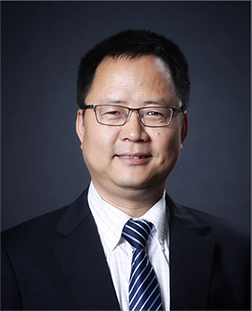
Nie Yongzhan, Distinguished Professor of the Changjiang Scholars Programme, Deputy Secretary-General of the Chinese Anti-Cancer Association, and Deputy Director of the Department of Gastroenterology, Xijing Hospital, Air Force Medical University
(Nie Yongzhan: My special congratulations on the official launch of the China Urine Plan led by Professor Gao Youhe. I particularly hope that, under the leadership of Professor Gao and the other professors, and drawing on advanced omics concepts supported by today's artificial intelligence big data and clinical big data, our urine plan will play an important role in basic and translational research on tumours and other chronic diseases. I also look forward to our China Urine Plan bearing fruit as soon as possible. Thank you, everyone.)
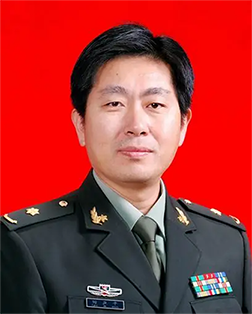
Tian Yaping, Chair of the National Medical Professional Committee; Chair of the First and Second Councils of the Clinical Medicine Branch of the Chinese Society of Biochemistry and Molecular Biology; Director of the Birth Defect Prevention and Control Technology Research Center, Medical Innovation Research Department, Chinese PLA General Hospital
(Tian Yaping: Warm congratulations on the formal publication in Science China of the China Urine Plan initiated by Professor Gao Youhe and other professors. Urine is an important biological sample that is simple and easy to obtain; the metabolites of all the body's tissue cells, and its physiological and pathological processes, are all reflected to varying degrees in urine. Through standardised and systematic technical study and analysis of the patterns of change in the biomolecules contained in urine, we can therefore help deliver comprehensive health assessment across the whole life cycle, and support the building of a Healthy China.)
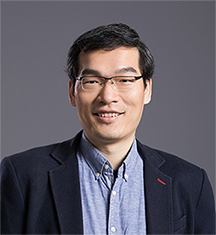
Guo Tiannan, Secretary-General of the Chinese Human Proteome Organization (CNHUPO) and Head of the Proteomics Complexity Science Laboratory at Westlake University
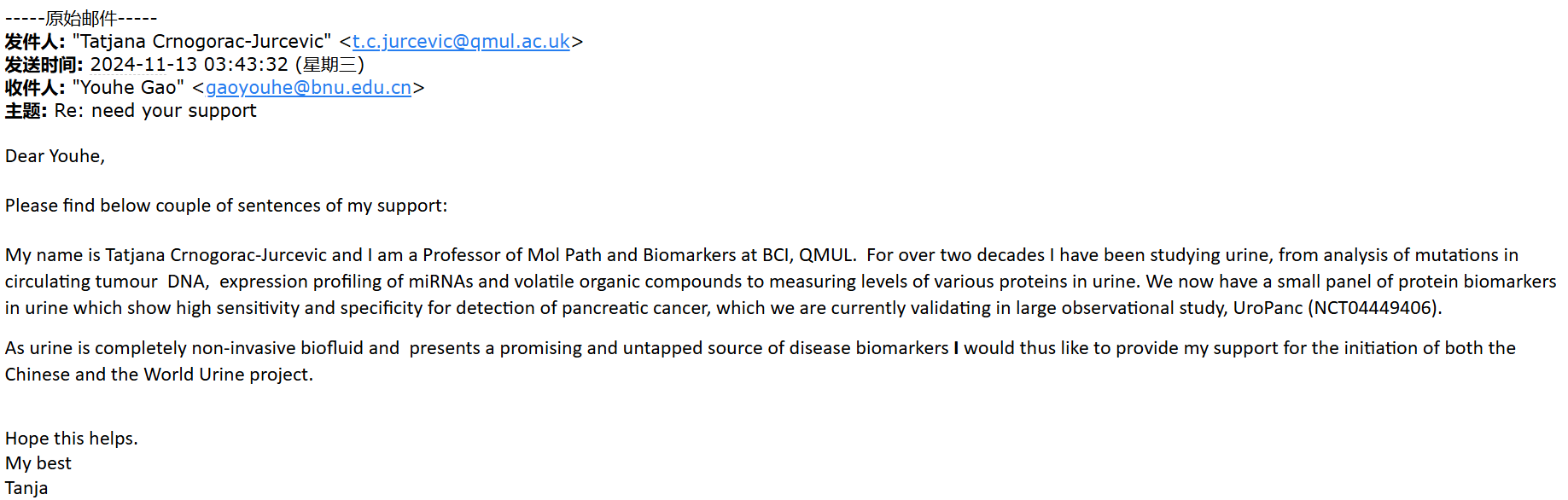
(Guo Tiannan: Urine is a completely non-invasive biological sample, and it contains a wealth of information closely linked to human health and disease. I strongly support the China Urine Plan advanced and proposed by Professor Gao Youhe, and I hope that the plan will receive everyone's support.)
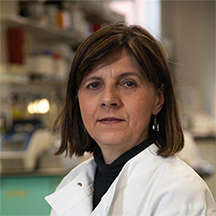
Professor Tatjana Crnogorac-Jurcevic, Co-Chair of the Human Proteome Organization Urine Proteome Initiative (HUPO UPI), Queen Mary University of London
Message by email:
It is understood that initiatives for research programmes on urine biomarkers are not confined to China: internationally, Professor Gao Youhe has also joined with other committed colleagues at home and abroad to launch an initiative.
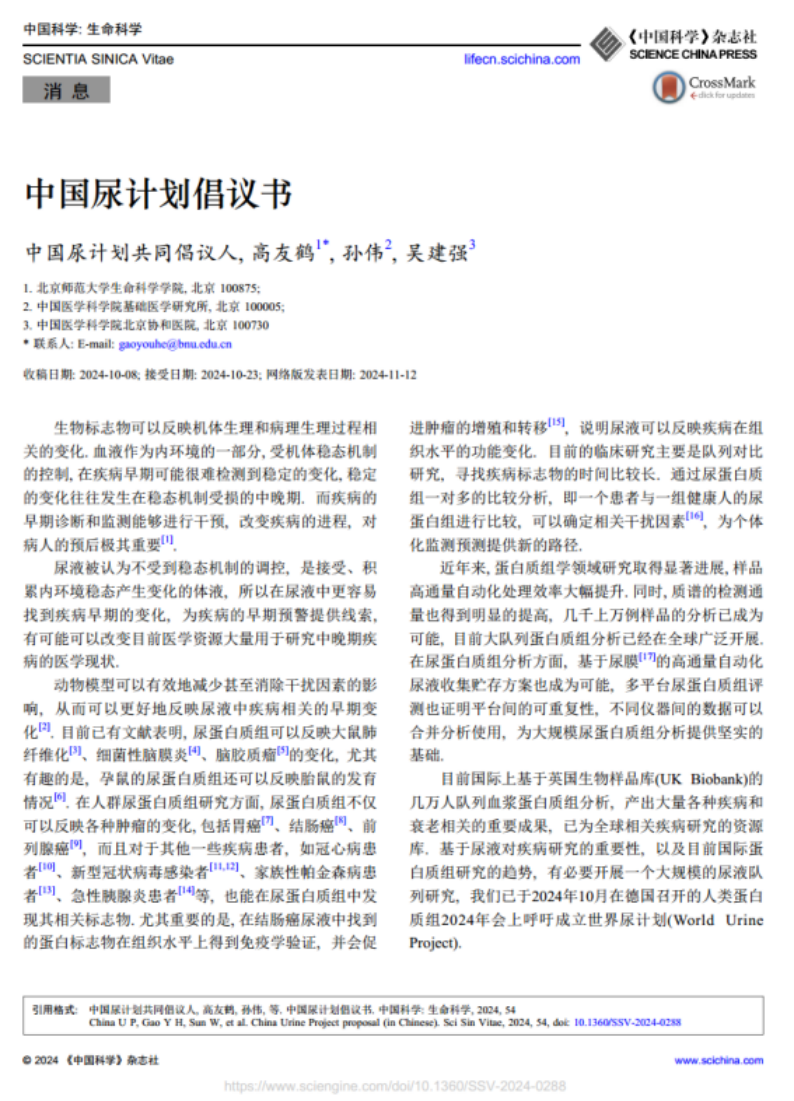
The China Urine Plan Initiative
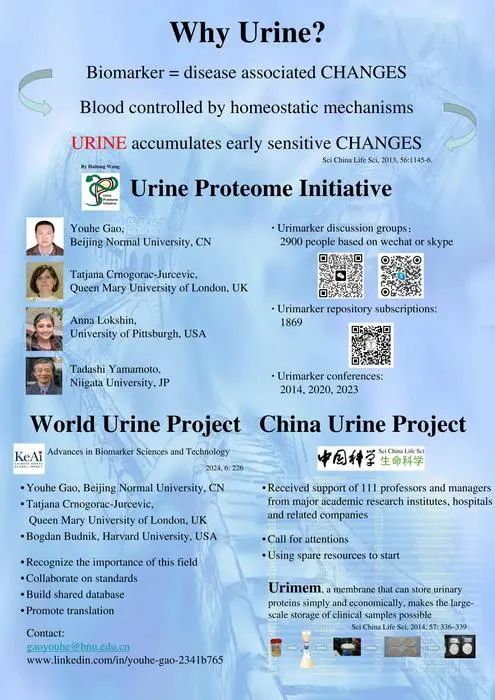
The International Urine Plan Initiative
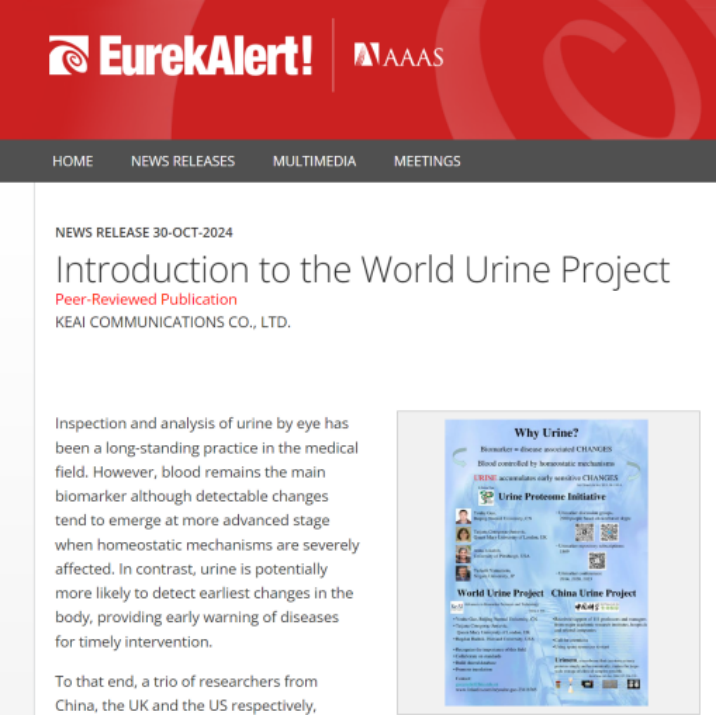
The International Urine Plan is gradually becoming known to all
The China Urine Plan is not only a scientific research project, it is also the starting point of a health revolution full of potential. Through comprehensive exploration and analysis of the biomarkers in urine, this plan is expected to greatly improve our ability to diagnose and treat disease at an early stage, thereby saving more lives and reducing the burden on healthcare systems. The pioneering work of Professor Gao Youhe and his team provides a valuable research platform and collaboration opportunity for the scientific community in China and abroad. We look forward to the global research community, the medical community and relevant enterprises responding actively to this initiative, and jointly advancing the cause of human health. The implementation of the China Urine Plan will not only promote the development of science and technology, it will also lead the way towards a healthier and more sustainable future.
Editor's view: from the proposal of proteomics research in 1994 to the multi-omics research of today, researchers have put forward a grand vision and invented a variety of technologies. The difficulty at present is that existing technologies still cannot read this "book from heaven" well. This may be linked to the individual and population differences caused by homeostatic regulation in samples such as tissue and blood. Research into disease markers in the urine system may open up a new line of thinking, because it removes the interference of homeostatic mechanisms, extracts the essential elements and simplifies the model, and can be expected to move into clinical application more quickly. Moreover, this was proposed by the Chinese; once it becomes a major science programme, it will be the Chinese who lead this great science programme for humanity, raising the standing of Chinese science and benefiting human health.
