
Ageing is, in essence, a spatiotemporal dynamic imbalance of gene expression.
As ageing-related gene clusters are quietly and programmatically activated and repressed, the trajectory of life is rewritten along with them. Exercise, as a kind of "economical vaccine", fights this physiological decline in its own distinctive way. It not only reshapes gene expression networks and maintains metabolic homeostasis, it has also been shown to awaken the youthful potential of cells and even produce striking effects in the repair of cognitive function.
At the same time, omics technologies are steadily becoming the "panoramic mirror" that reveals the body's overall changes, offering an unprecedented precision of vision for uncovering the mechanisms of ageing and strategies of intervention. In what follows, let us review the key research advances of recent years on exercise against ageing and unlock the scientific secrets behind this "age-reversal revolution".
01 ▎Temporal multi-omics analysis of sustained exercise training
Article title:Temporal dynamics of the multi-omic response to endurance exercise training
Journal:Nature
Impact factor:64.8
Main content:
In 2024, the MoTrPAC research team, made up of institutions including Stanford University in the United States, used multi-omics analysis to systematically chart the dynamic multi-omic profiles — transcriptome, proteome, metabolome, lipidome and modifications — of whole blood, plasma and 18 tissue samples from rats at different exercise time points. The study revealed thousands of shared or tissue-specific molecular changes and found marked sex differences across multiple tissues. The results showed that the adaptive changes induced by sustained exercise mainly involve immune regulation, metabolic remodelling, stress response and the regulation of mitochondrial pathways. Through integrated multi-omics analysis, the study dissected in depth the impact of sustained exercise training on different tissues, providing comprehensive data support for exercise physiology research. These databases lay an important foundation for subsequent exploration of the multi-level regulatory mechanisms by which exercise acts on the body, and are a valuable resource for the field of exercise science.
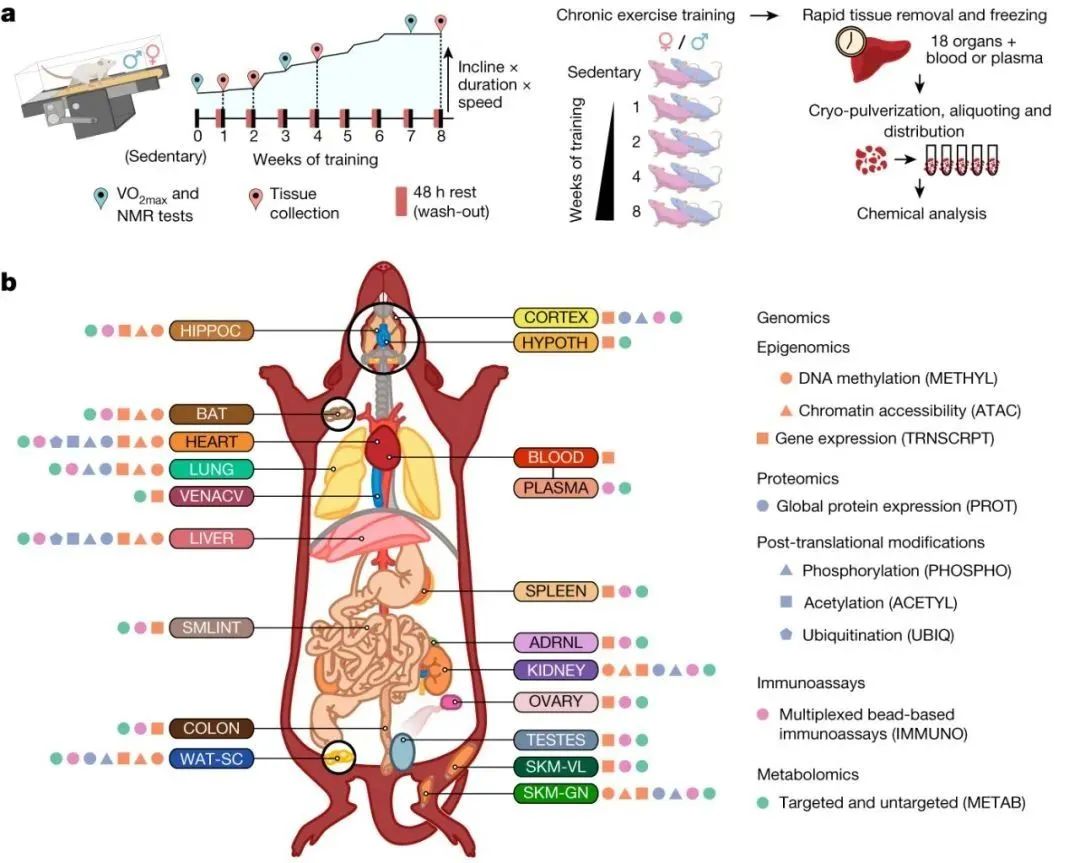
Multi-omics analysis of rats after training
02 ▎Plasma proteomics vs brain ageing
Article title:Blood factors transfer beneficial effects of exercise on neurogenesis and cognition to the aged brain
Journal:Science
Impact factor:44.7
Main content:
In 2020, researchers at the University of California, San Francisco used mass-spectrometry-based proteomics to compare the differential protein expression profiles in the plasma of exercising (aged/adult) and sedentary (aged/adult) mice. The study found that the expression level of Gpld1 in the plasma of exercising mice was significantly elevated, and that Gpld1 is closely linked to the improvement of neuronal function by exercise. To explore the mechanism further, the researchers built a Gpld1-overexpressing mouse model and, through proteomic analysis, revealed that Gpld1 may mediate the beneficial effect of exercise on neuronal function by hydrolysing GPI-anchored substrates. The study shows that exercise can slow the ageing process, and that its molecular mechanism may be related to the functional regulation of Gpld1. This finding provides a new theoretical basis for delaying brain ageing through intervention, and also opens up a potential research direction for the prevention and treatment of age-related neurodegenerative diseases.
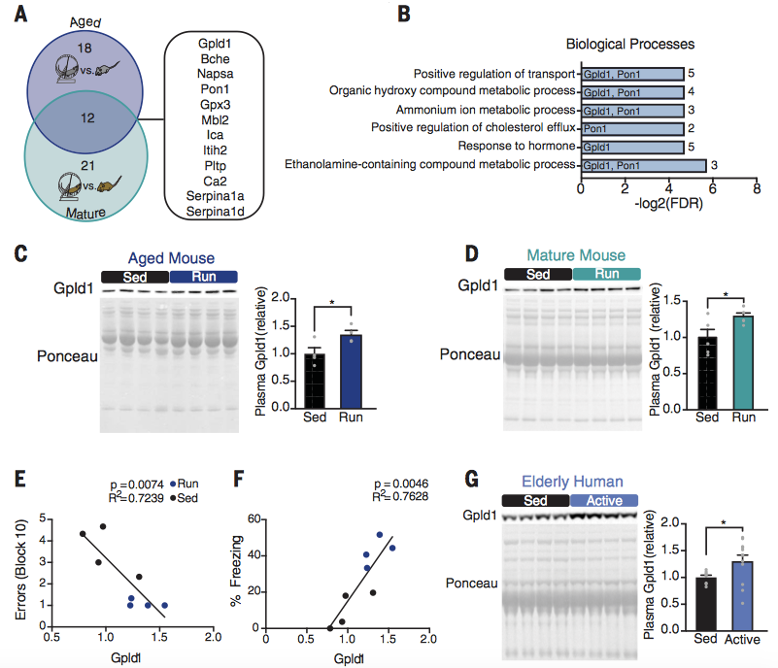
Differential protein analysis in the plasma of the exercise and sedentary groups
03 ▎Plasma metabolome vs sarcopenia
Article title:Novel metabolic and lipidomic biomarkers of sarcopenia
Journal:J Cachexia Sarcopenia Muscle
Impact factor:9.4
Main content:
Sarcopenia is a progressive, generalised clinical syndrome associated with ageing, marked by the loss of skeletal muscle mass together with declining muscle strength and function. This study adopted a randomised controlled trial design, enrolling 45 elderly patients with sarcopenia and 47 sex- and age-matched healthy controls. Using 1H-nuclear magnetic resonance (NMR) and liquid chromatography–tandem mass spectrometry (LC-MS/MS), the team performed metabolomic and lipidomic analysis of plasma samples to explore potential biomarkers of sarcopenia and to evaluate the effect of resistance training combined with nutritional support (RTNS). The results showed 12 significantly different metabolites between sarcopenia patients and healthy controls, including PI 32:1, carnosine and isoleucine, which showed high diagnostic performance in ROC curve analysis. After 12 weeks of RTNS intervention, the physical performance and body composition of the sarcopenia patients improved significantly, with grip strength and the skeletal muscle mass index both increasing markedly. At the same time, some metabolite levels tended to recover after the intervention, especially among metabolites that responded strongly to RTNS, suggesting that RTNS may play an important role in the treatment of sarcopenia. This study provides a blood-metabolism-level scientific basis for exercise intervention in sarcopenia and lays an important foundation for future research and clinical practice.
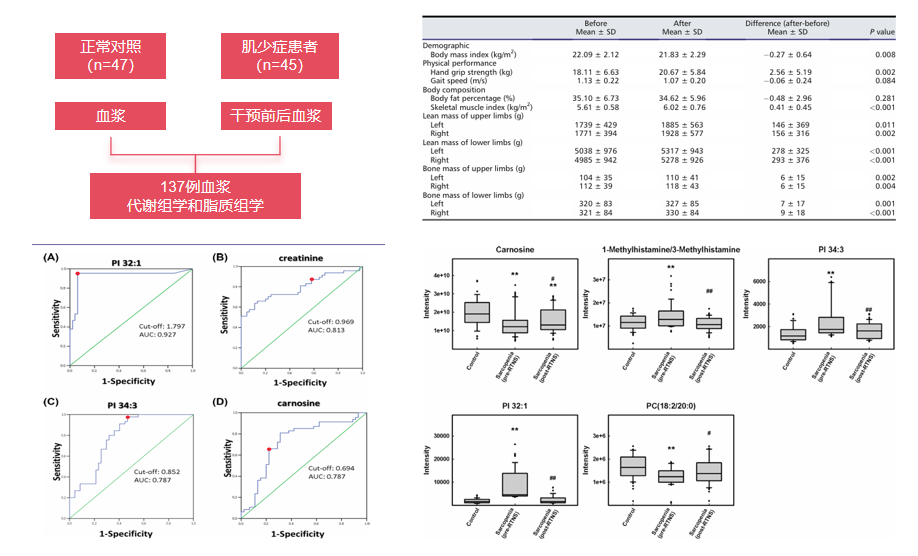
Study design and results
References:
[1] Temporal dynamics of the multi-omic response to endurance exercise training. Nature. 2024 May; 629(8010): 174-183. doi: 10.1038/s41586-023-06877-w. Epub 2024 May 1. PMID: 38693412; PMCID: PMC11062907.
[2] Blood factors transfer beneficial effects of exercise on neurogenesis and cognition to the aged brain. Science. 2020 Jul 10;369(6500):167-173. doi: 10.1126/science.aaw2622. PMID: 32646997; PMCID: PMC7879650.
[3] Novel metabolic and lipidomic biomarkers of sarcopenia. J Cachexia Sarcopenia Muscle. 2024 Oct; 15(5): 2175-2186. doi: 10.1002/jcsm.13567. Epub 2024 Aug 21. PMID: 39169398; PMCID: PMC11446726.
