
 Major release: blood lipid management enters the "era of comprehensive risk"
Recently, theExpert Consensus on the Comprehensive Management of Lipid-Related Cardiovascular Risk (2025)was officially released, led by prominent Chinese cardiovascular experts including Huo Yong, Peng Daoquan and Chen Zhenyue. This authoritative consensus states clearly, for the first time:
"Even when LDL-C (low-density lipoprotein cholesterol) is on target, as many as 60%–80% of cardiovascular events still occur."
In other words —
On-target blood lipids ≠ safety.
We used to believe that "once LDL-C comes down, the risk is gone". That is far from enough.
Experts point out that what truly drives atherosclerosis is not cholesterol alone, but also the neglected factors of"abnormal lipoprotein particles" and "residual risk factors"
 Key points: uncovering the truth about "invisible risk"
1 LDL-C is only the starting point; particle size and number matter just as much
In people with diabetes, hypertriglyceridaemia or metabolic syndrome, the same LDL-C level may correspond to completely different risks.
Small dense LDL (sdLDL) particles oxidise more easily and deposit more readily; they are the "invisible killer" behind myocardial infarction and stroke.
The conventional four-item lipid panel is often unable to identify these high-risk subtypes.
2 ApoB: a more precise risk indicator
The consensus recommends that apolipoprotein B (ApoB) be measured at the same time in high-risk and very-high-risk populations. It reflects more accurately the true number of "atherogenic particles" in the blood, and is particularly suitable for individuals with elevated triglycerides or very low LDL-C.
In one sentence: if ApoB is high, the risk is still high.
3 Non-HDL-C and remnant cholesterol (RC) also deserve attention
Non-high-density lipoprotein cholesterol (non-HDL-C) covers the cholesterol content of all harmful lipoproteins, while remnant cholesterol (RC) is the invisible risk that remains after LDL-C has met its target.
The guideline recommends bringing both into long-term monitoring, especially in people with diabetes, high triglycerides or obesity, whereelevated non-HDL-C and RC usually mean "on target but not safe".
4 Emphasis on "early screening, early diagnosis, early treatment" and dynamic management
The consensus states clearly:
● lipid screening should be started as early as possible to reduce cumulative cholesterol exposure
● reduce LDL-C variability and maintain long-term stability
● establish dynamic risk assessment and long-term follow-up mechanisms
"Early screening, early identification, early intervention" is the key to reducing cardiovascular events.
 From consensus to practice: precision lipid testing is imperative
Within the framework of this guideline,the conventional "four-item lipid panel" (TC, TG, LDL-C, HDL-C) can no longer fully reflect the true risk.
ProteinT has launched the "LipidVoyage™ Precision Blood Lipid Test", which introduces internationally advanced NMR (nuclear magnetic resonance) spectroscopy and takes lipid testing into an era of "particle-level" precision.
A single tube of blood enables full-spectrum identification and quantification of lipid components, lipoprotein particles and all of their subfractions.
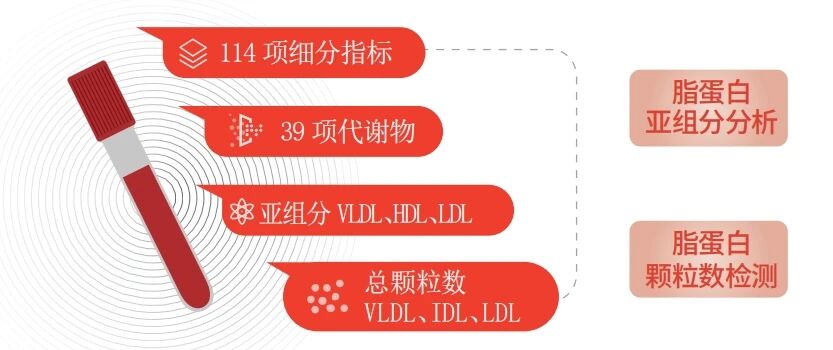
What LipidVoyage™ changes
● identifying the hidden population with "normal LDL-C but still high risk"
● quantitatively assessing the "residual risk" after lipid-lowering treatment
● guiding personalised intervention and dynamic follow-up
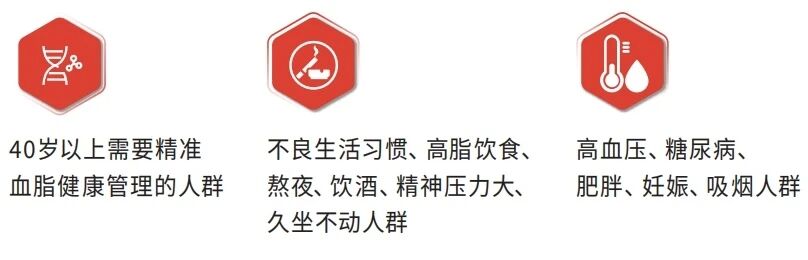

Don't let "meeting the target" mask the risk
The Expert Consensus on the Comprehensive Management of Lipid-Related Cardiovascular Risk (2025) opens a new direction for lipid management:
moving from a "single indicator" to "multi-dimensional risk management",
and from "passive treatment" to "active prevention".
The LipidVoyage™ Precision Blood Lipid Test is precisely the key tool for putting this concept into practice. It allows hidden cardiovascular risk to be detected earlier, and makes "on target but not safe" a thing of the past.
✨ Precise testing · scientific prevention · protecting cardiovascular health — starting with LipidVoyage™.
