
When technology steps into the real world,
what it changes is never a parameter — it is a life.
Today, we would like to tell a story condensed from the real world. It represents a typical closed loop in the real-world use of LuCa™, and it represents what “one step earlier” really means.
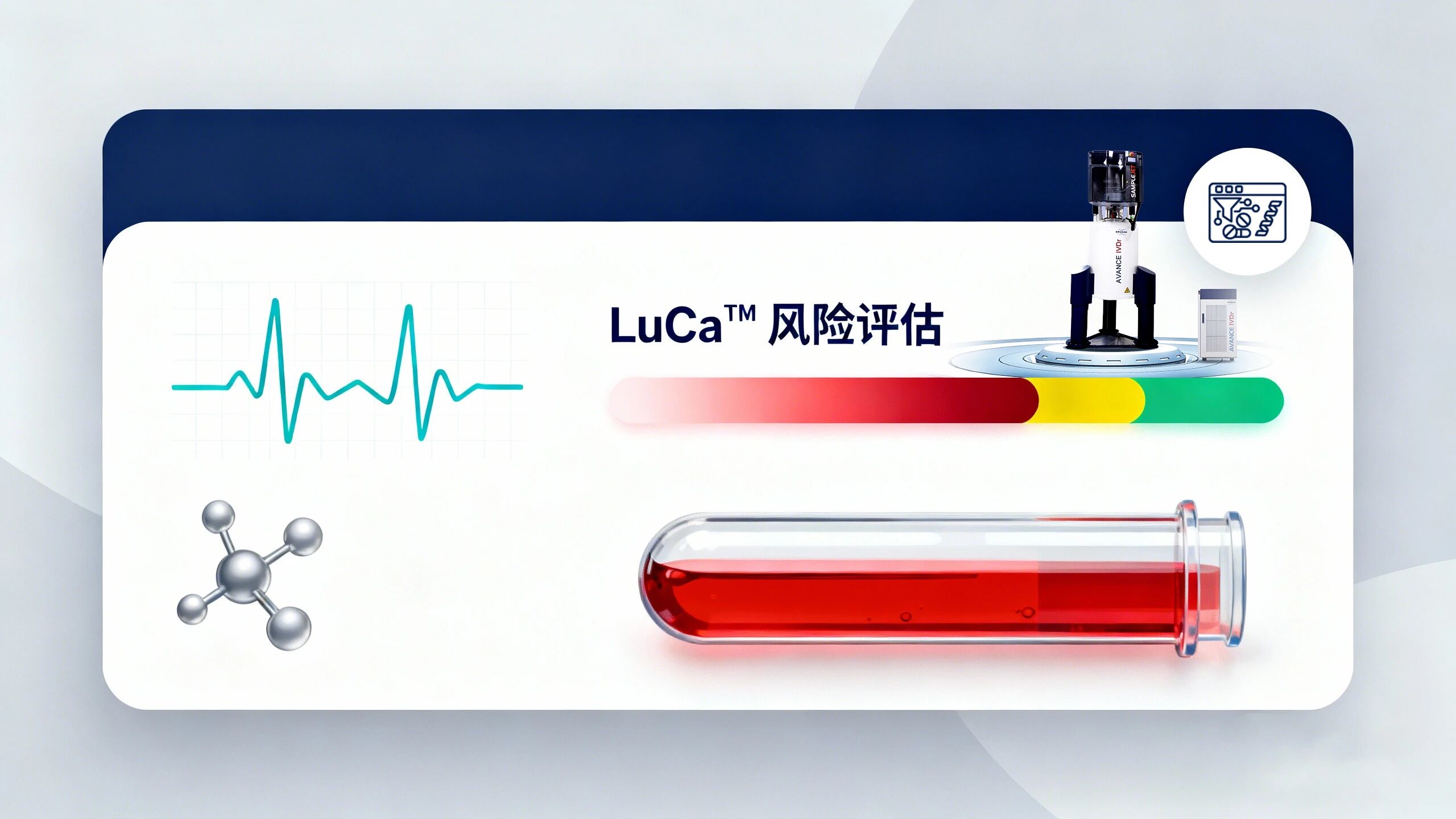
 A check-up with one seemingly casual add-on
Mr. Zhang, 45, is an ordinary office worker. He does not smoke and does not stay up late — exactly the kind of person who would say, “I am in pretty good health.”
At this year’s health check-up, he asked offhandedly: “Is there anything more comprehensive available these days?”
The staff told him about a new item: LuCa™, an early lung cancer risk assessment built on the Elixir™ large model.
“They are drawing blood anyway, so let’s just add it on.”
He did not give it much thought — it was simply a light, offhand choice.
① A “risk alert” from the blood
On the fifth working day after his blood draw, Mr. Zhang received the digital LuCa™ assessment result.
In a key section, the report gave a professional recommendation:
- Risk level: elevated
- Further imaging examination recommended (e.g., LDCT)
No alarmist language, no “positive.” Yet that calm, measured reminder was enough for him to decide to go to the hospital for a CT scan.
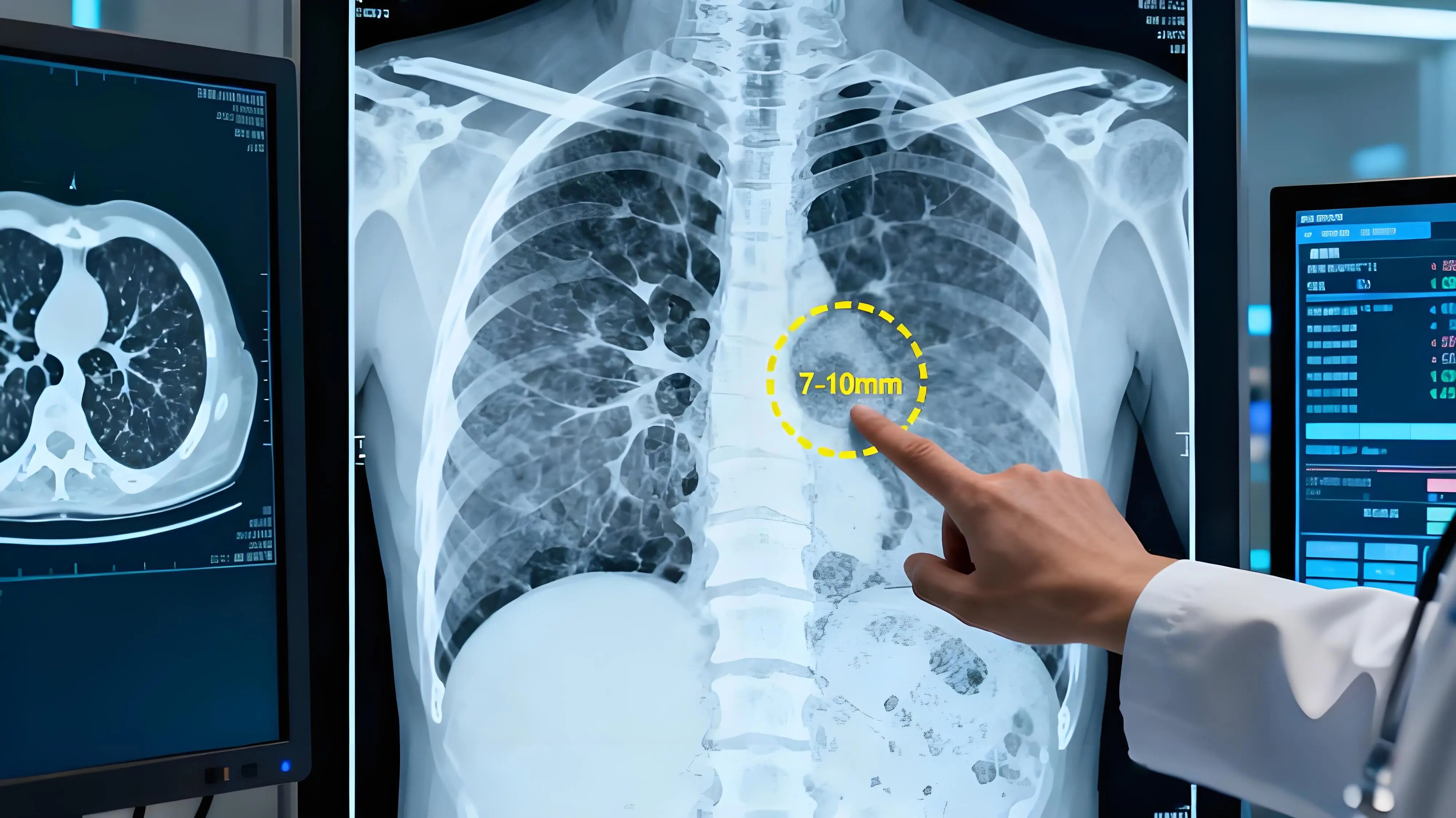
② Imaging follow-up: a 7 mm signal
The LDCT showed — right upper lobe: a 7 mm ground-glass nodule.
“Nothing serious. Come back for a review in three months.”
That was what the doctor said, but it was the first time Mr. Zhang realized:
without LuCa™, none of this would ever have happened.
A nodule of this size is very easily overlooked or missed during a routine health check-up, or simply filed away under “annual follow-up.”
③ Three months later: why the timeline matters
Three months later he returned for a follow-up scan. The nodule had grown to 10 mm.
The doctor’s attitude became noticeably more serious: “This needs to be dealt with as soon as possible.”
Fortunately, it was still at a stage that could be controlled and completely resected.
The surgery went smoothly. The postoperative pathology report read:
(Lung) minimally invasive adenocarcinoma (MIA) — a very early-stage lung cancer with almost no spread.
Had it been found six months later, the treatment approach, the cost, the prognosis — even the course of his life — could all have been different.
④ The value of “one step earlier” is never just a slogan
A line Mr. Zhang often repeats after his discharge is:
“Early detection is not an advertising slogan — it is a lifeline measured in time.”
LuCa™ cannot diagnose cancer, and it cannot replace a CT scan. But it can do one very important thing:
flag molecular-level risk abnormalities before a tumor has formed a clear structure.
This is something conventional imaging cannot do.
It moves the examination earlier,
makes doctors take it seriously,
and gives risk a chance to be brought to the surface.
And “earlier” is the core variable in the odds against lung cancer.
⑤ The meaning of technology ultimately lands on people
Behind Mr. Zhang’s story lie:
• Model training on 160,000 real-world samples
• Repeated validation across multi-center data
• Modeling of faint signals from NMR molecular spectra
• Long-term collaboration between scientists and clinical experts
All of which has converged into what he received that day:
An accurate, measured and reliable risk notification report.
What it changed was not a data point, but a disaster that would otherwise have been left to unfold later.
From one story to a bigger future
The significance of LuCa™ is not limited to lung cancer.
The same technical logic —
using metabolomic signals in blood to detect systemic abnormalities of disease — is expected to play a role in:
Gastric cancer | Liver cancer | Neurodegenerative diseases | Chronic disease risk management
and many more scenarios.
And this is precisely why we never stop exploring. The ultimate meaning of technology is to give every person the right to be “half a step ahead.”
Mr. Zhang’s story is a piece of luck that can be told,
and we hope that this kind of luck can become an everyday reality for more people.
May every silent risk be illuminated in time.
